
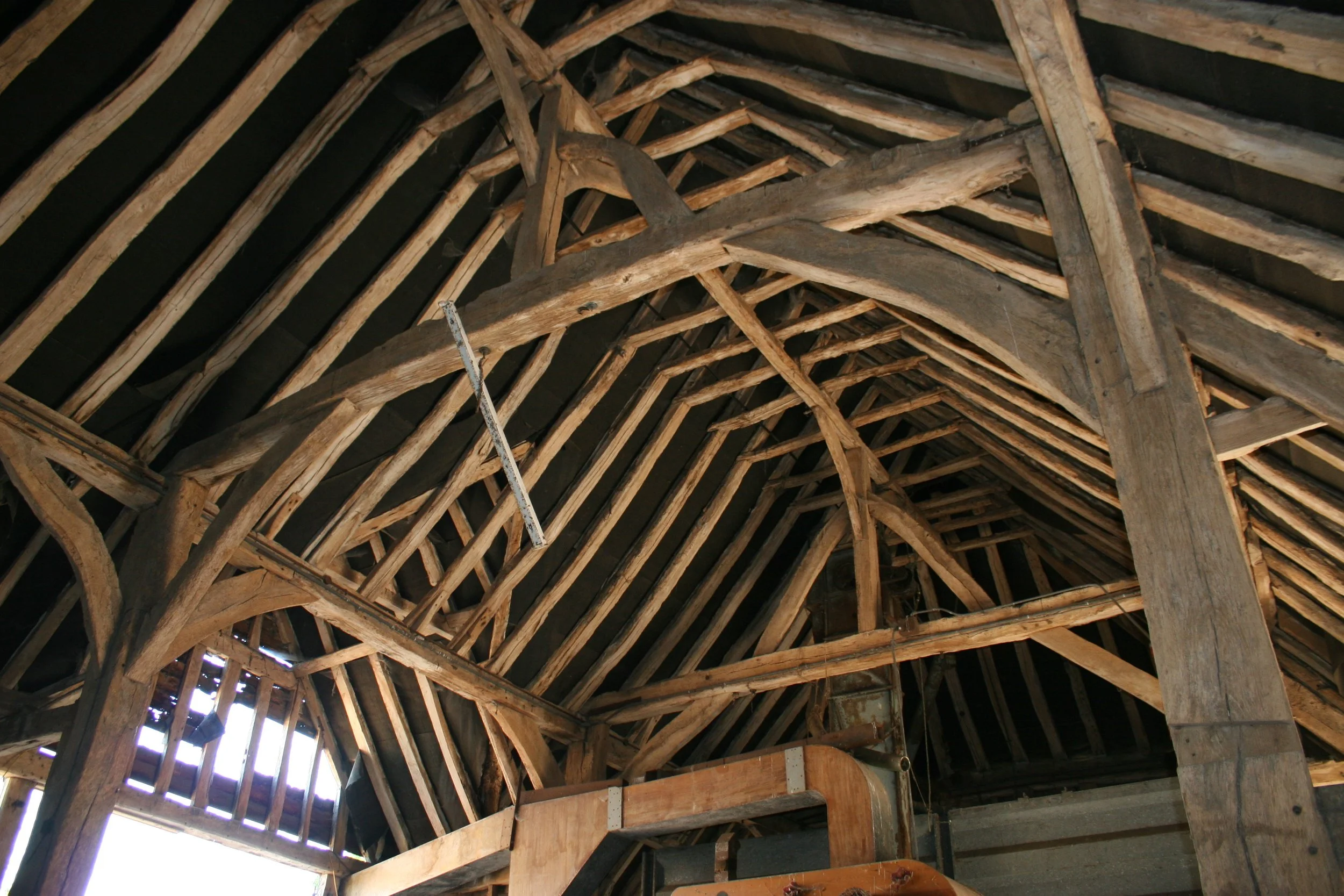
Barns
Barns are a specific type of agricultural building designed to store produce from the field prior to winnowing and gleaning. In East Anglia, they are nearly all timber-framed but there are C19th brick-built barns. Early barns have no porches and low doorways. As time progressed into the 15th century, porches were added so that wagons could be brought inside full and exit empty which is why so many barns have one very tall door and one lower. Many barns were used to thresh and winnow grain and, for this, they were designed to create a cross draught and had thresh-holds (also called leaps) to contain the processed grain.
Most barns actually date to C.1800 and have been built from much older timbers or have been disassembled and moved. By about 1830, many farms had Barn Engines and small shelters which were built on the back of barns to run the machinery for threshing and gleaning that was previously done by hand or by horse gins.
There is a tendency to think that barns were large, open buildings without internal divisions or floors but this is purely down to all the divisions being removed in the C20th to install modern machinery, in particular seed dressers and grain dryers. A classic example of this is the Barley Barn at Cressing Temple, built c.1206 but heavily modified throughout its life. The Barley Barn was divided off completely at each end by 12ft high weather-boarded stud walls and the aisles were fenced with gates to keep sheep. The divisions were photographed still in place by John Tarling in 1936.
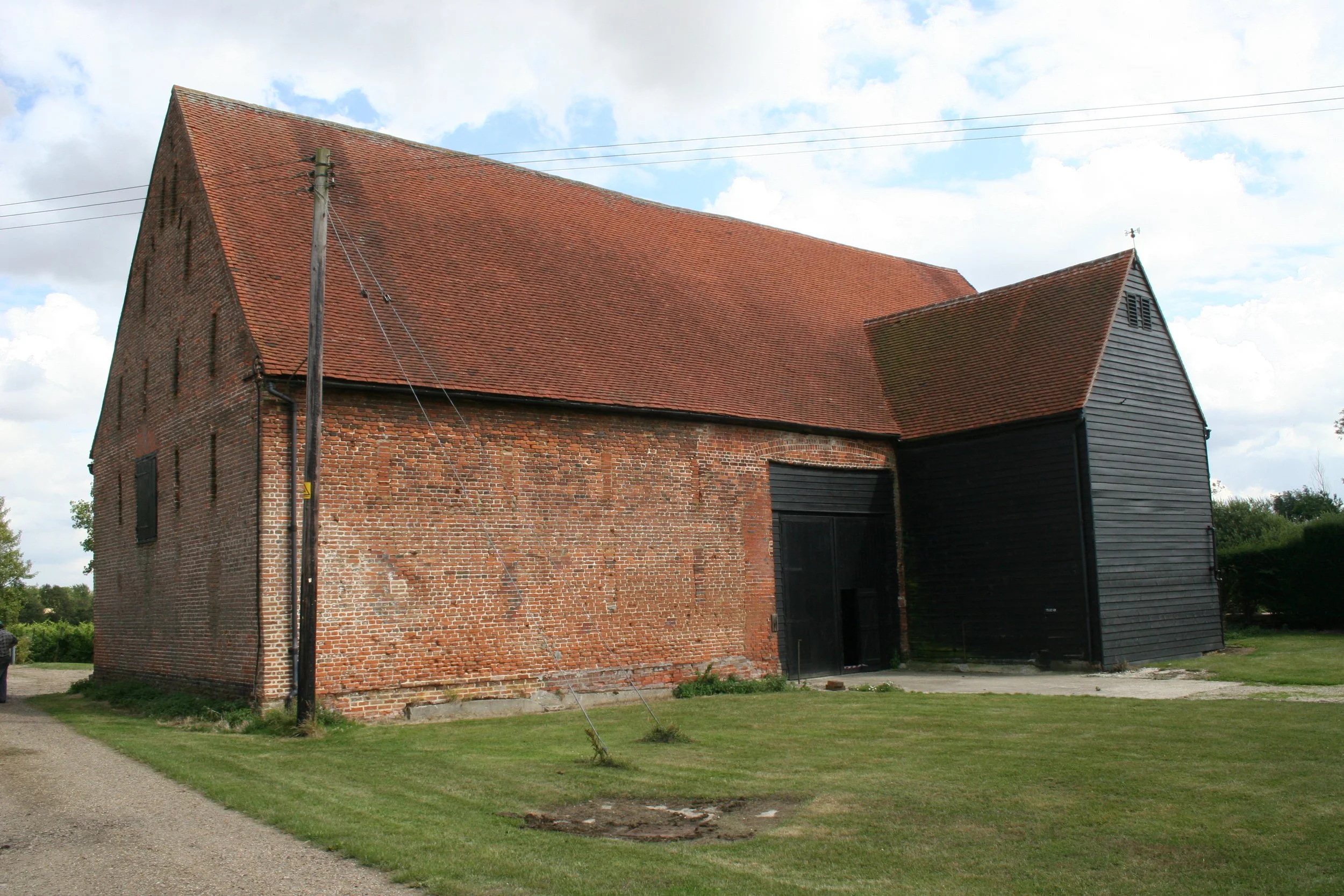
Anne of Cleves Barn, Bardfield
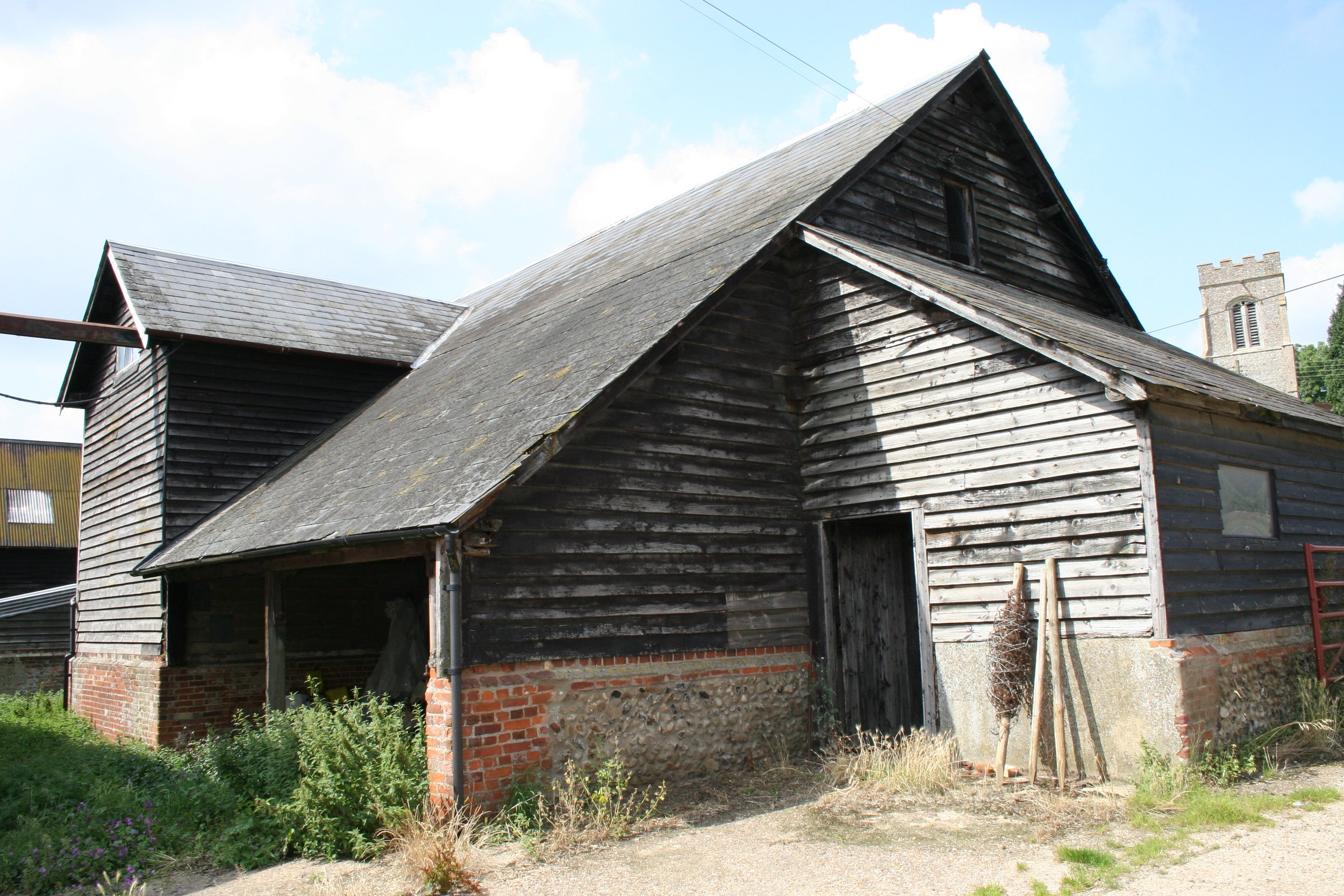
Hawkedon Barns, Hawkedon
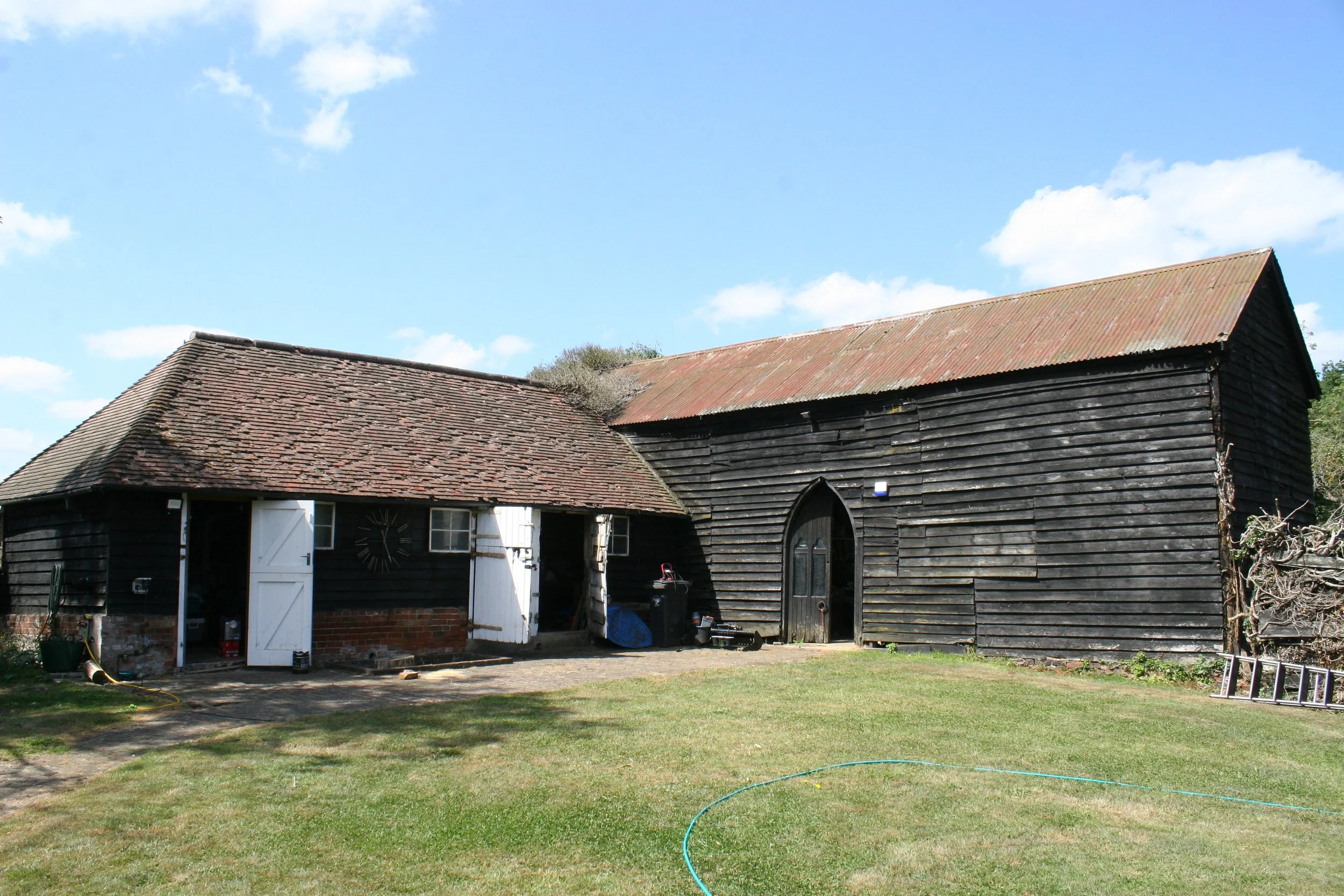
Brook Farm Barn, Barnston
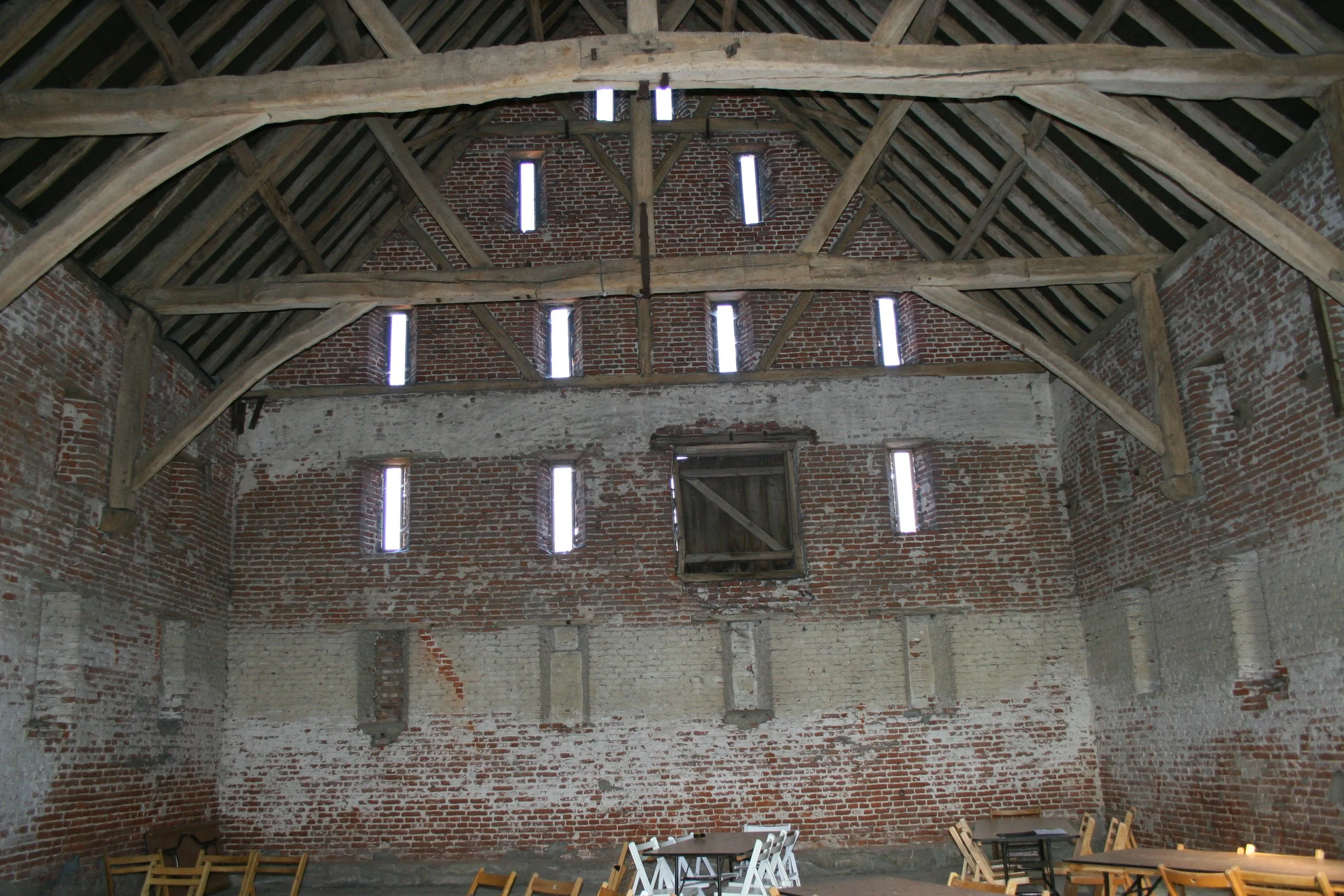
Anne of Cleves Barn, Bardfield
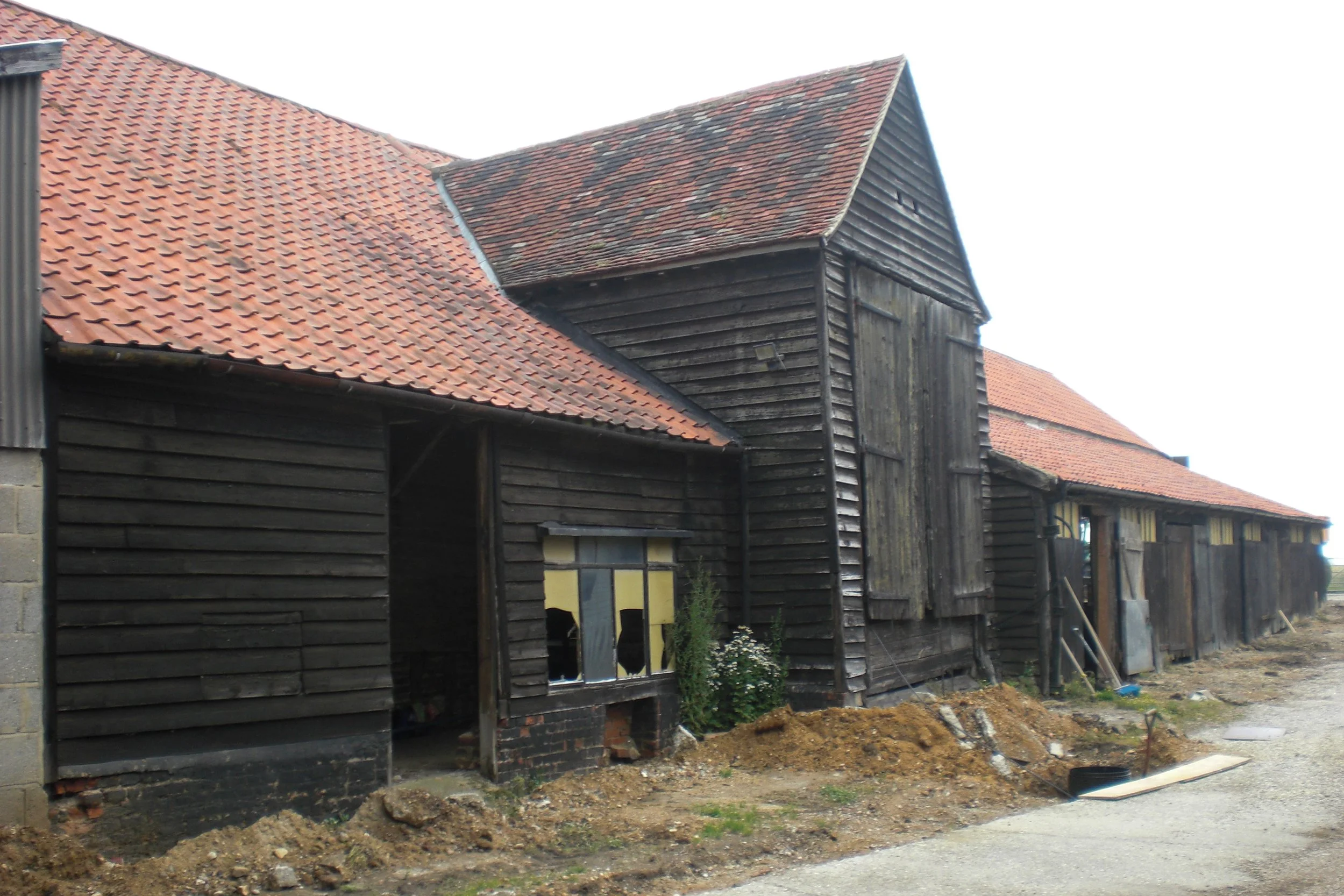
Creeksea Place Farm Barn
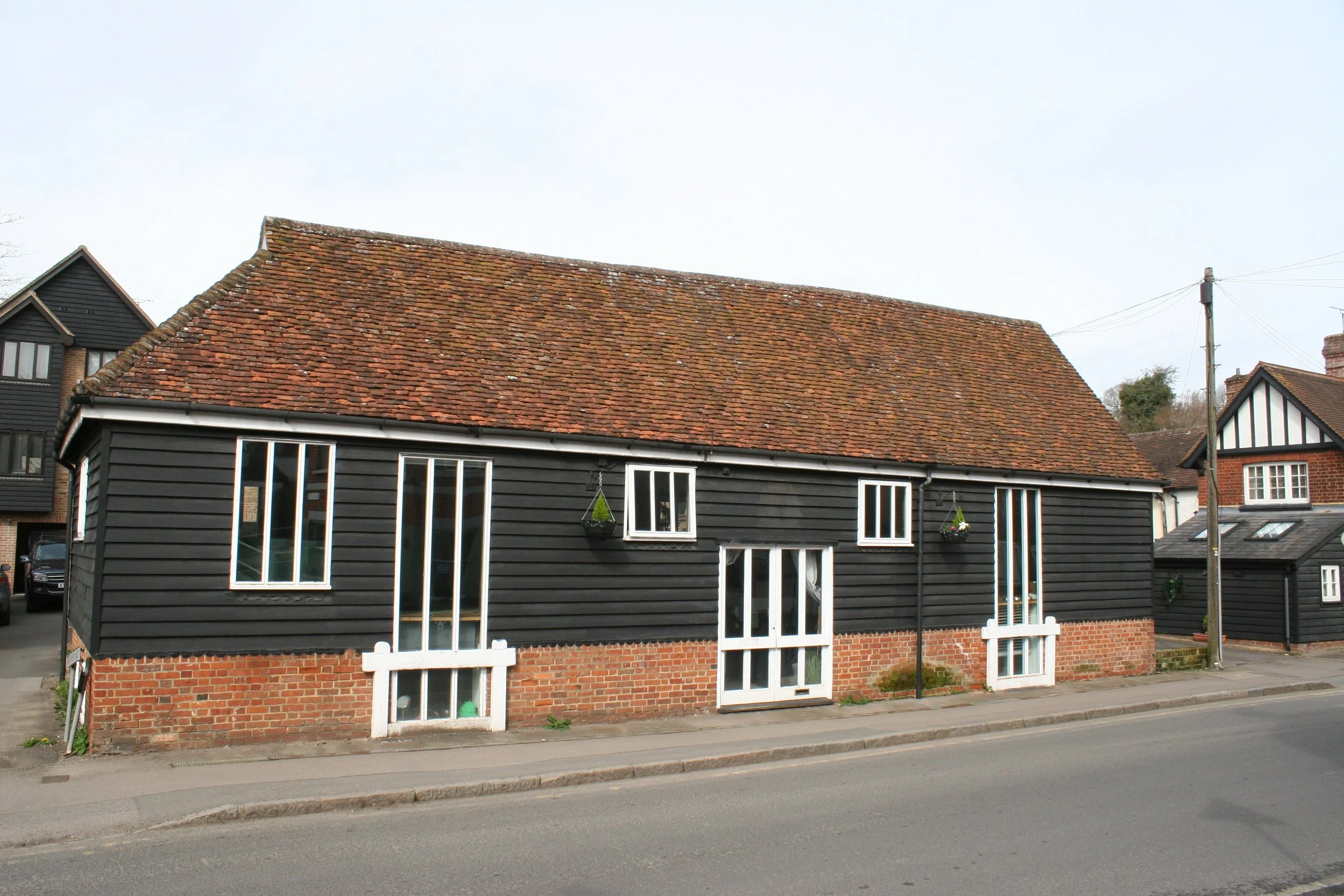
Brewery Barn, Stanstead
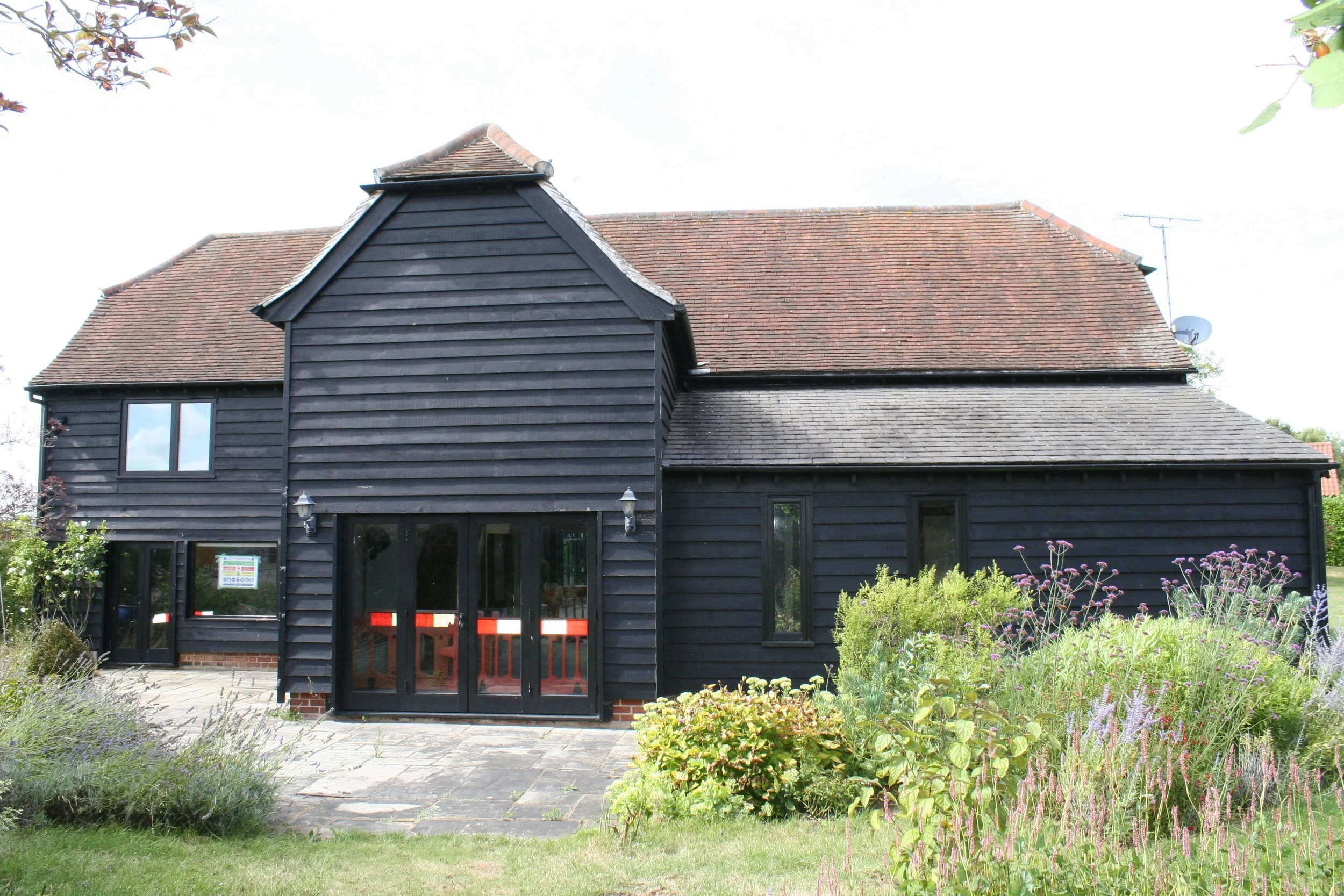
Dinahs Barn, Chelmsford
-
![]()
Chithams, Ramsden Heath
Crown Post Roof
-
![]()
Dorewards Hall, Bocking
Crown Post Roof
-
![]()
Marks Barn, Braintree
Gambrel Roof
-
![]()
Glovers Farm Barn, Hastingwood
Queen Post Roof
-
![]()
Bluegates Barn, Blackmore
Queen Post Roof
-
![]()
Liston Gardens
Pole Barn
-
![]()
Berwick Hall Farm, Toppesfield
Metal Framed Barn
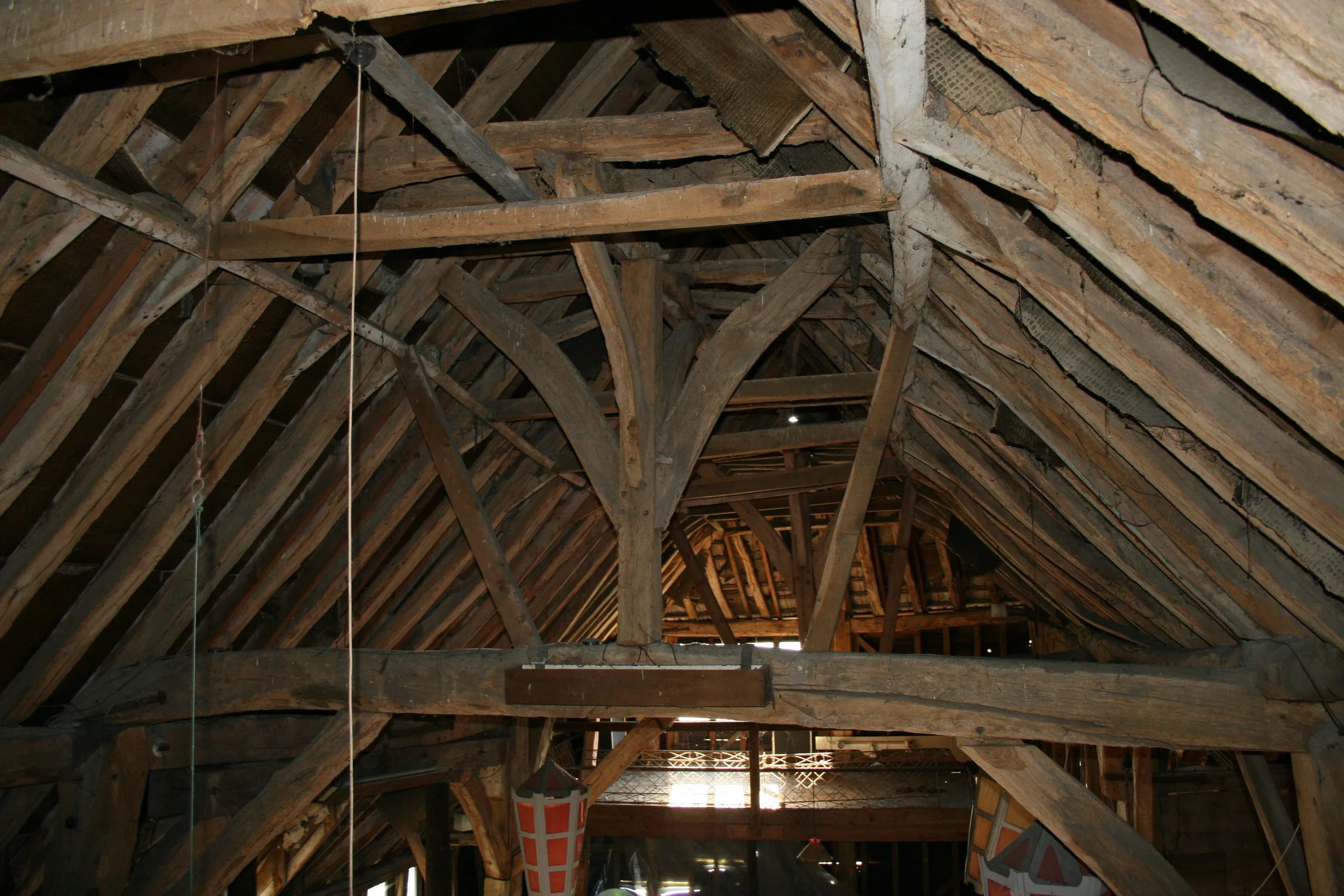
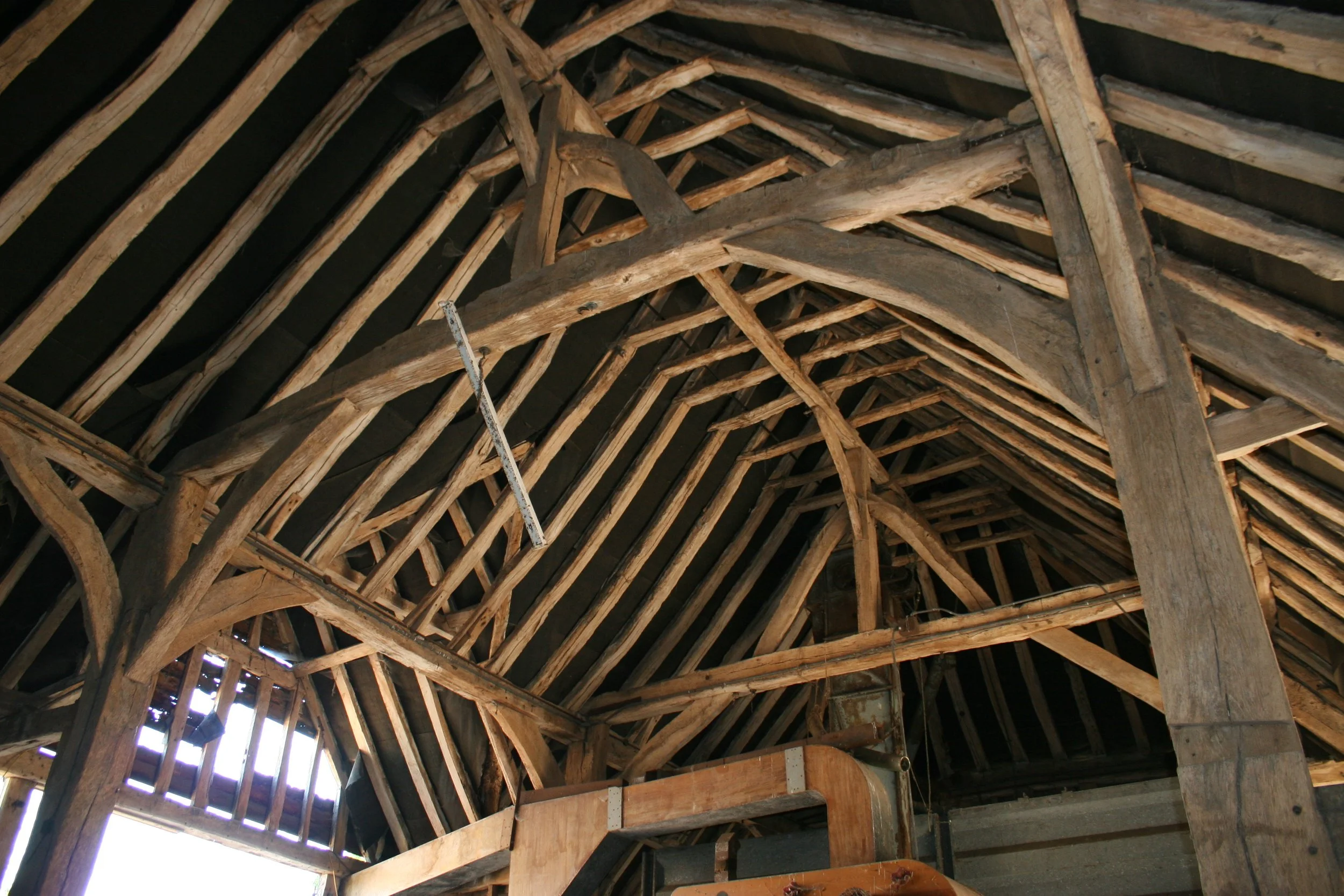
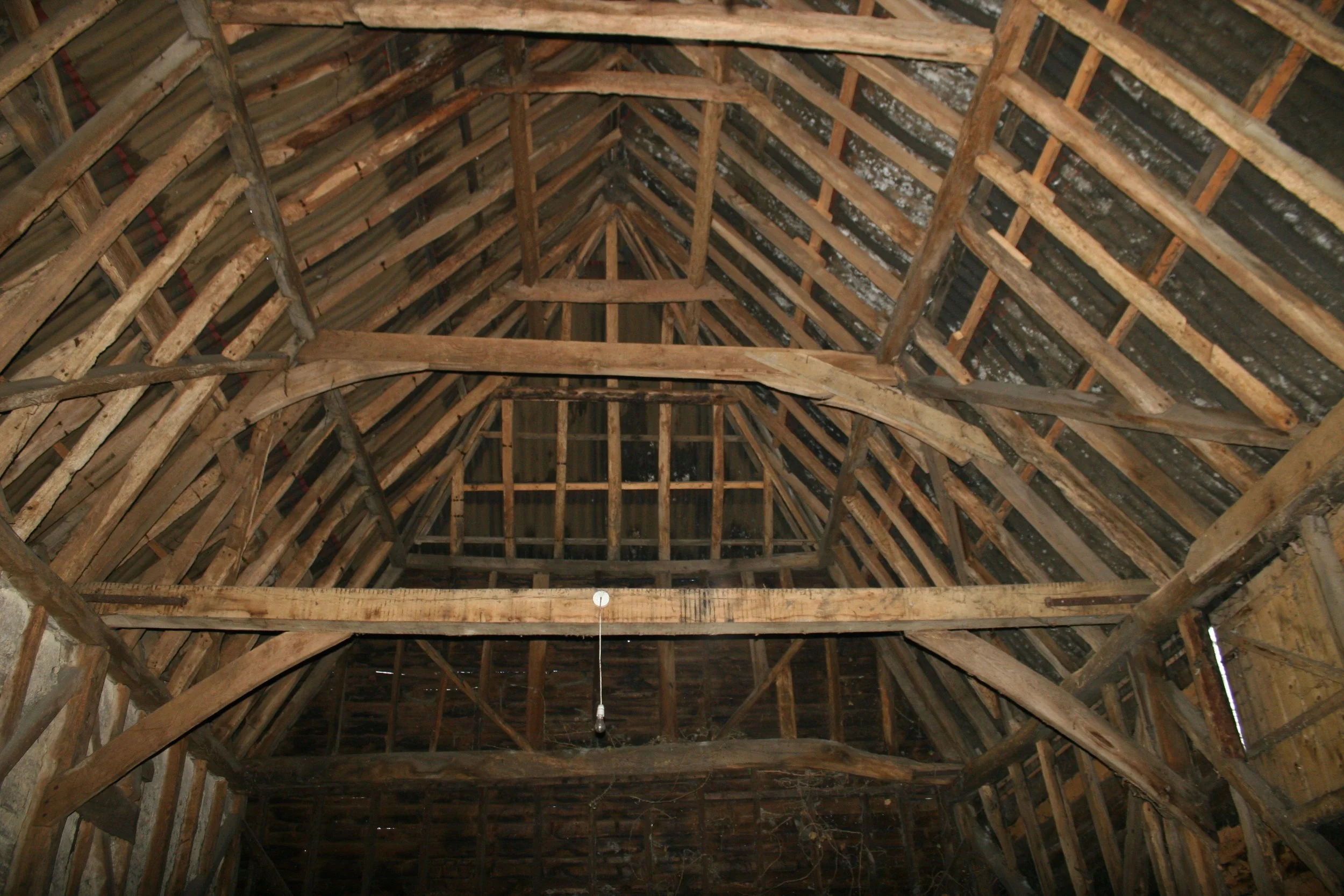
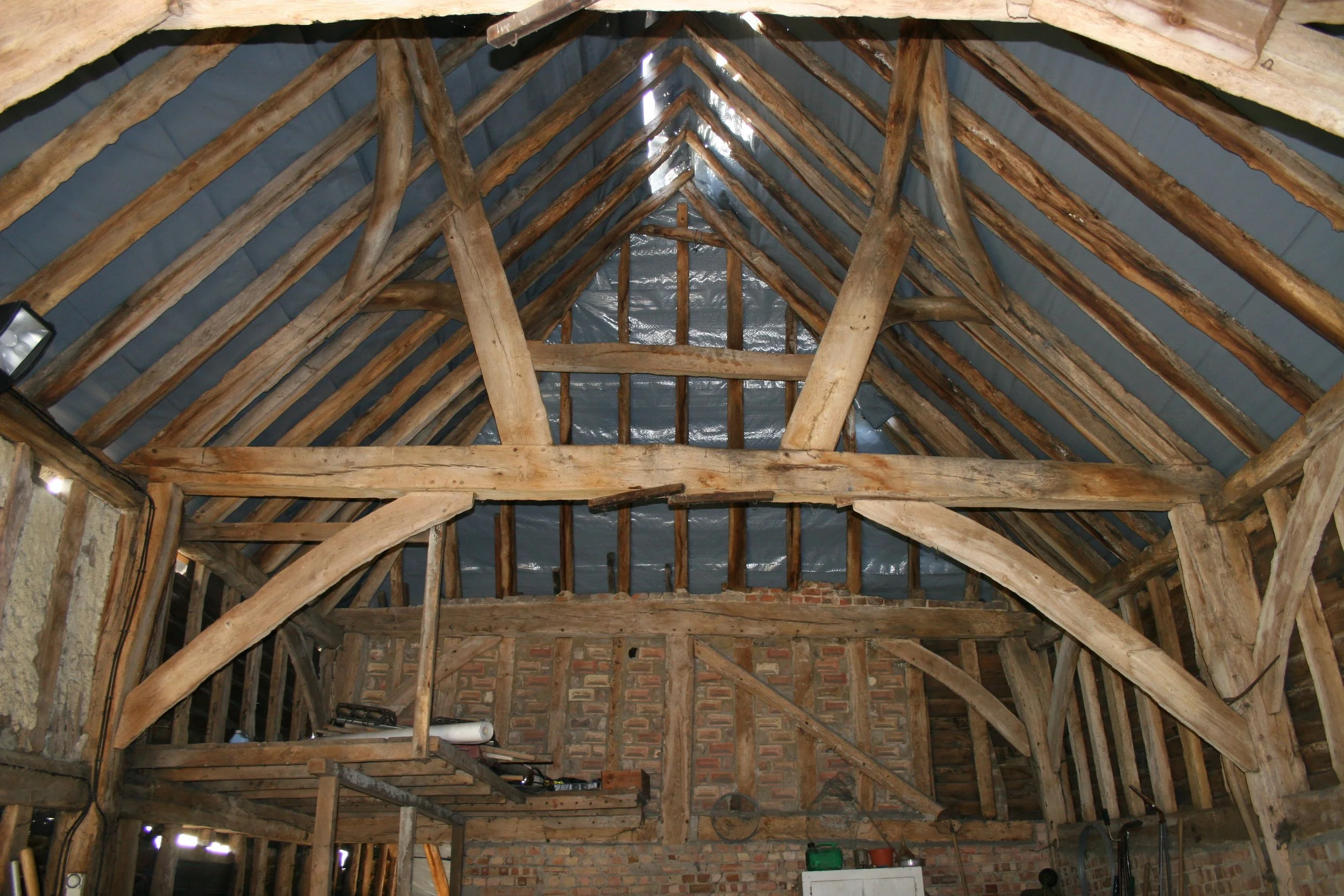
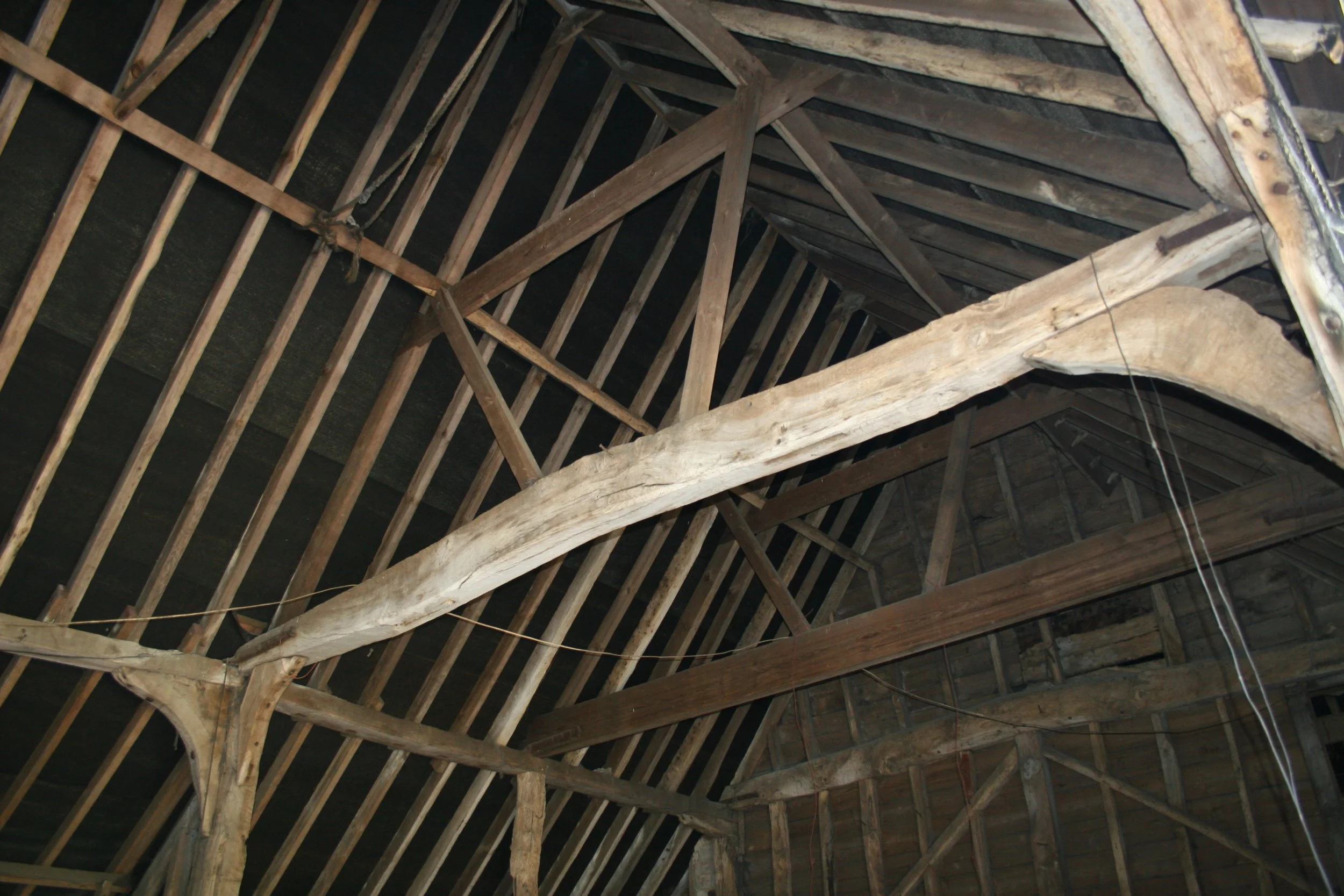
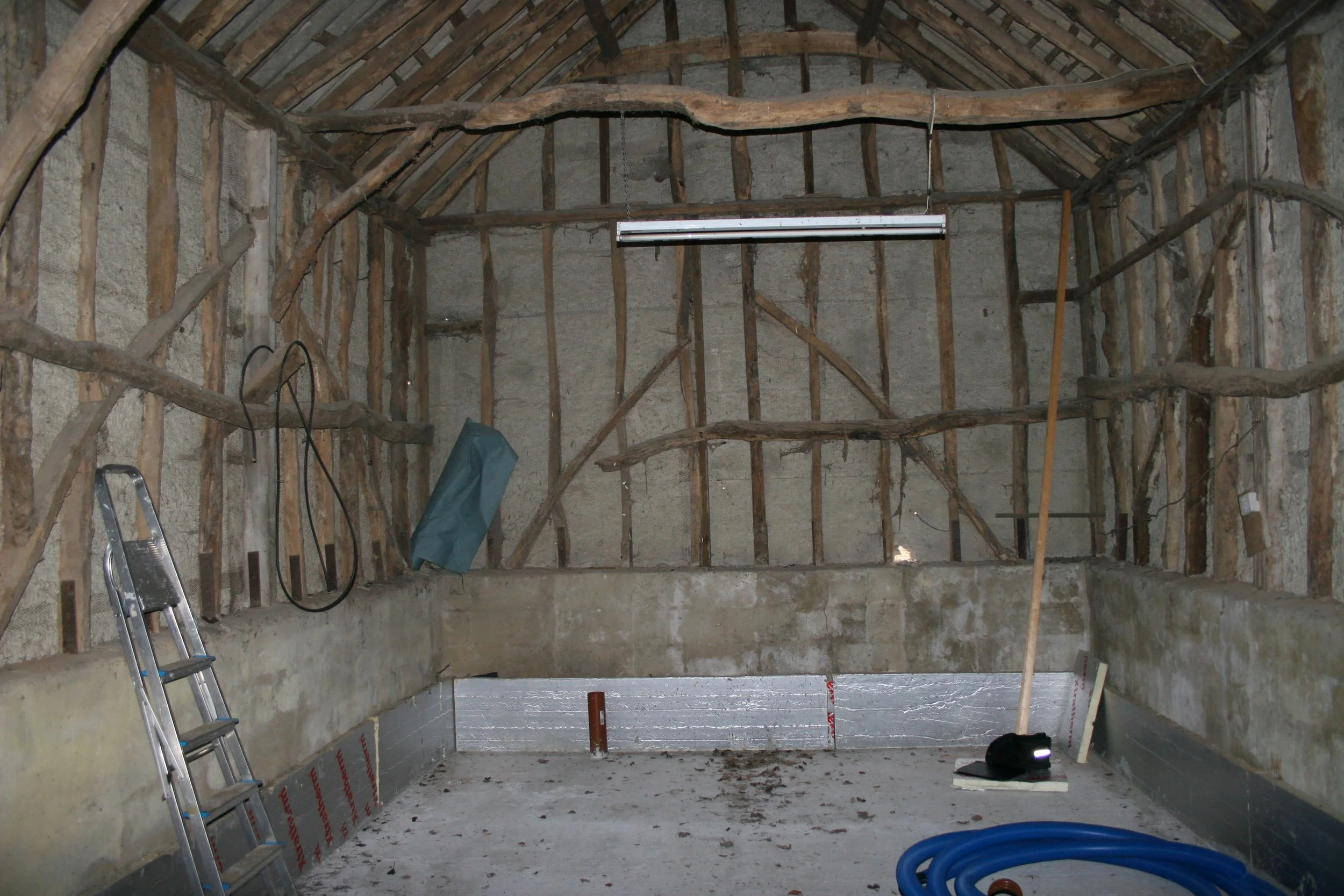
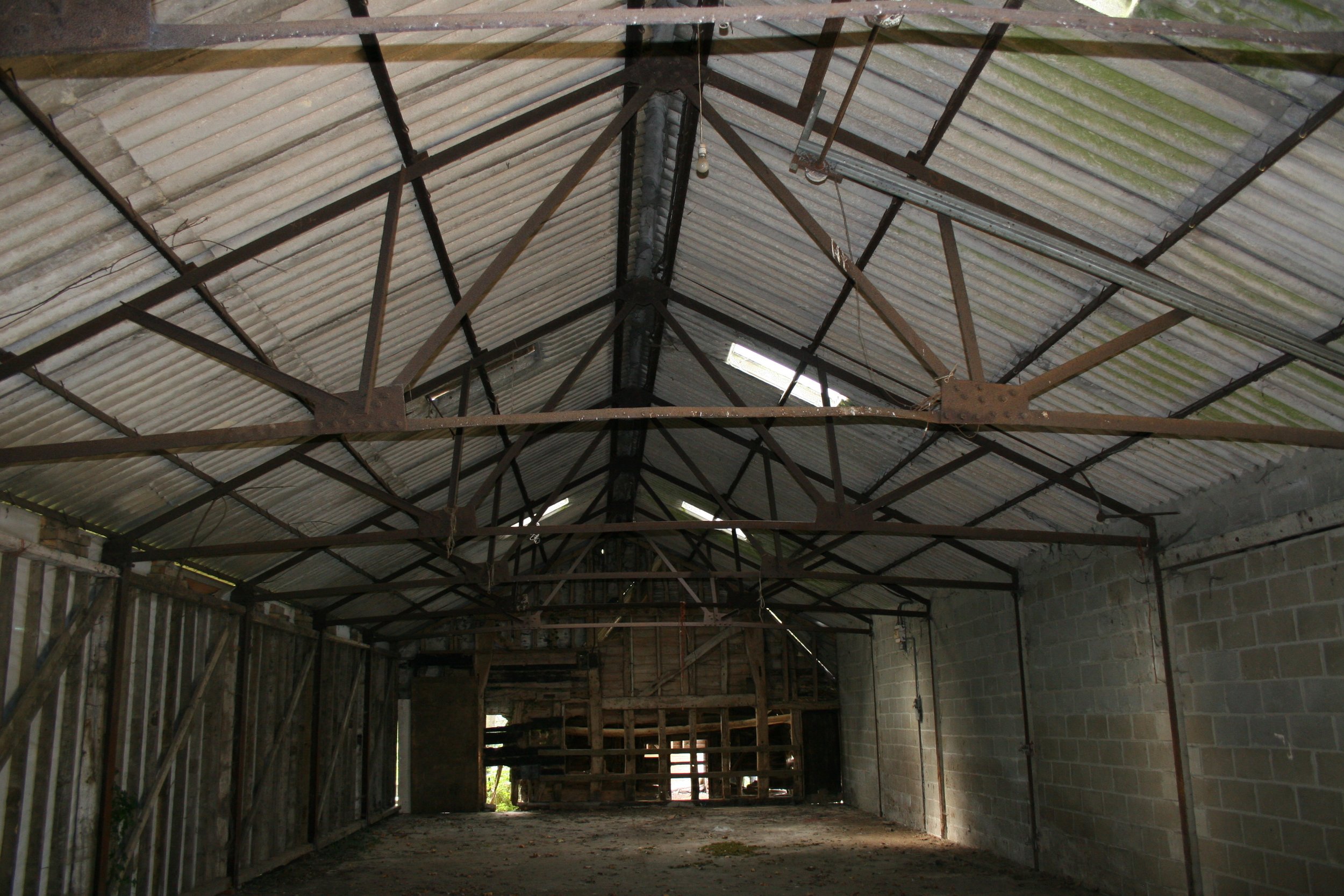
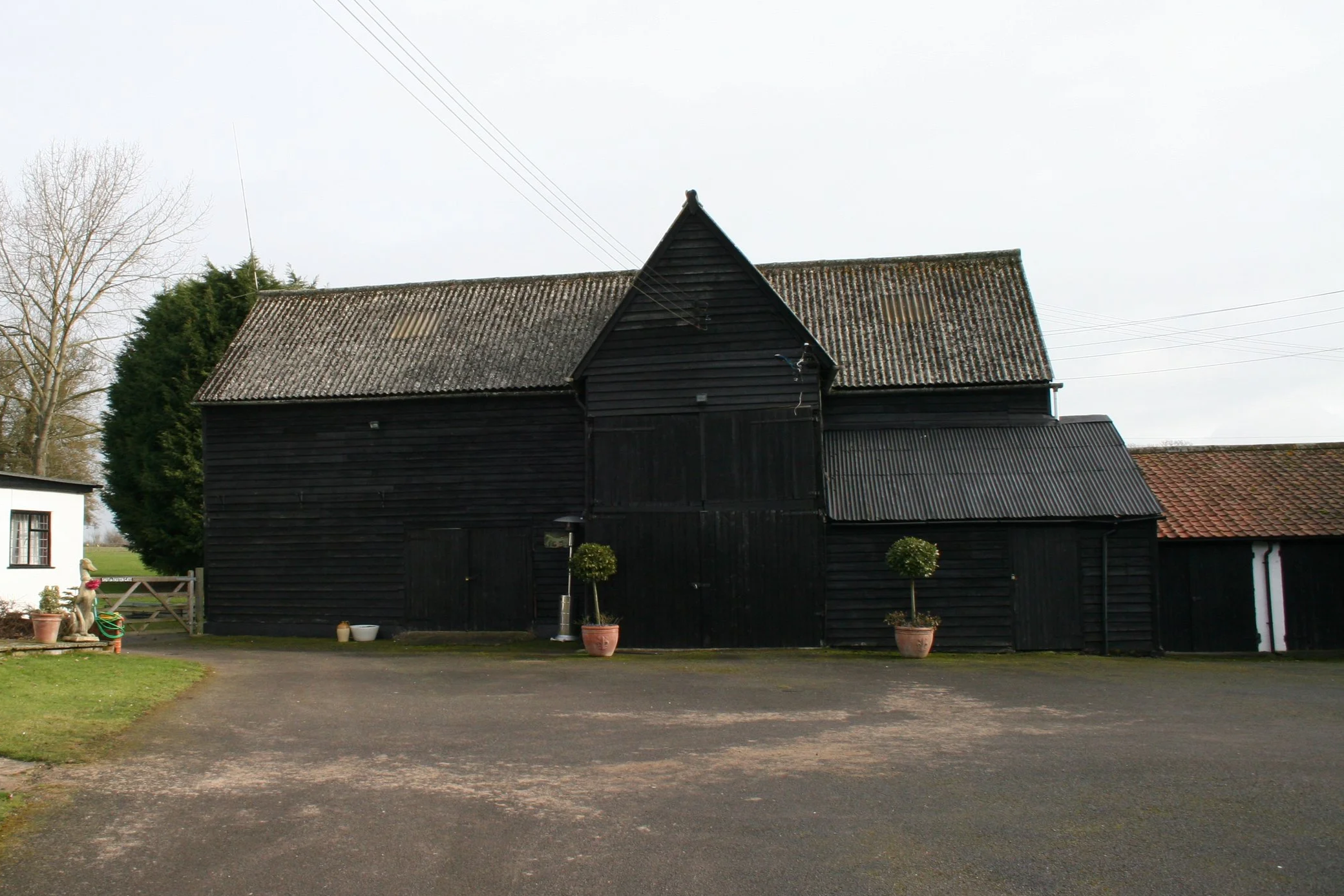
Duck End Farm, Lindsell
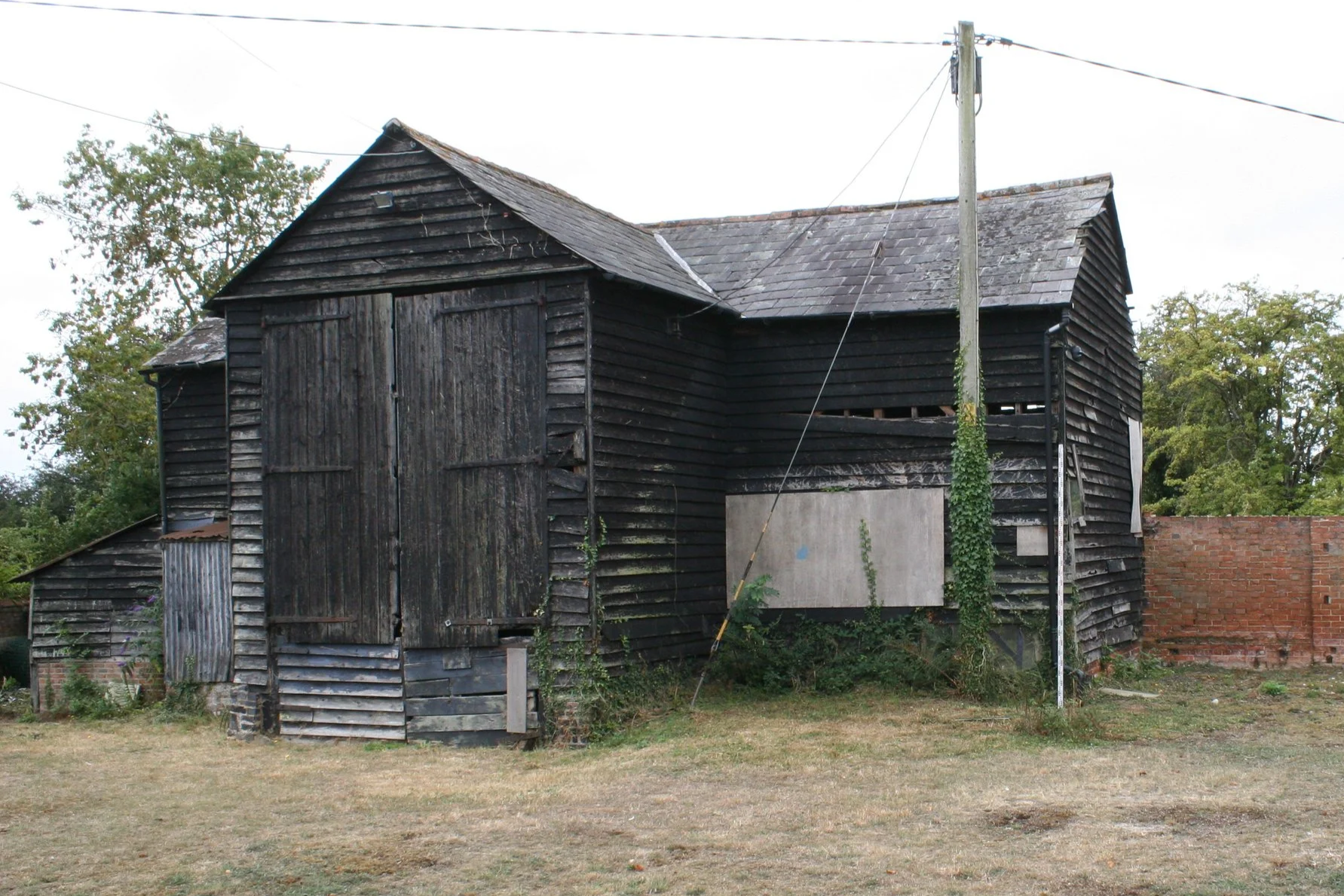
High Field Stile, Bocking
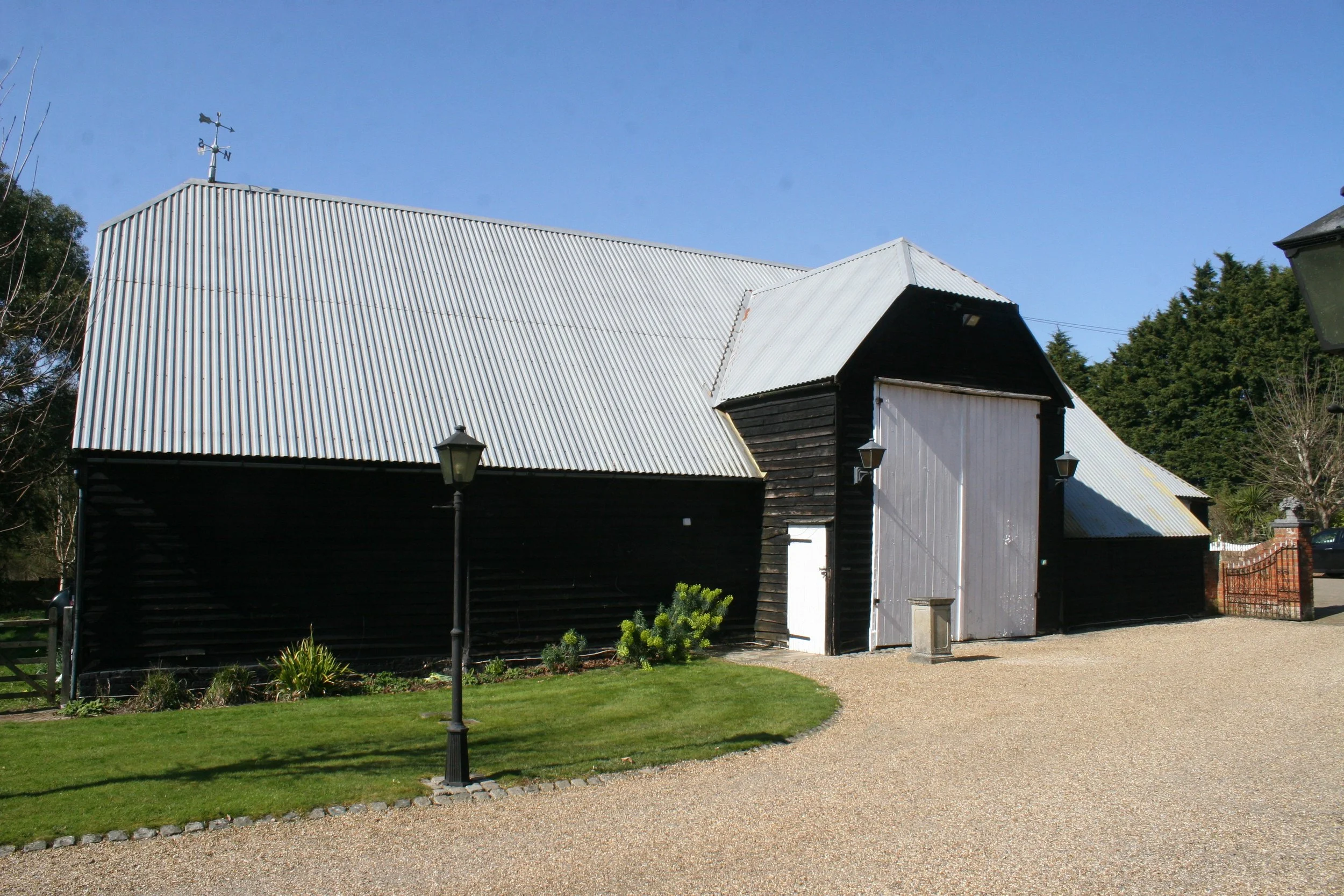
St Cleres Hall, Danbury
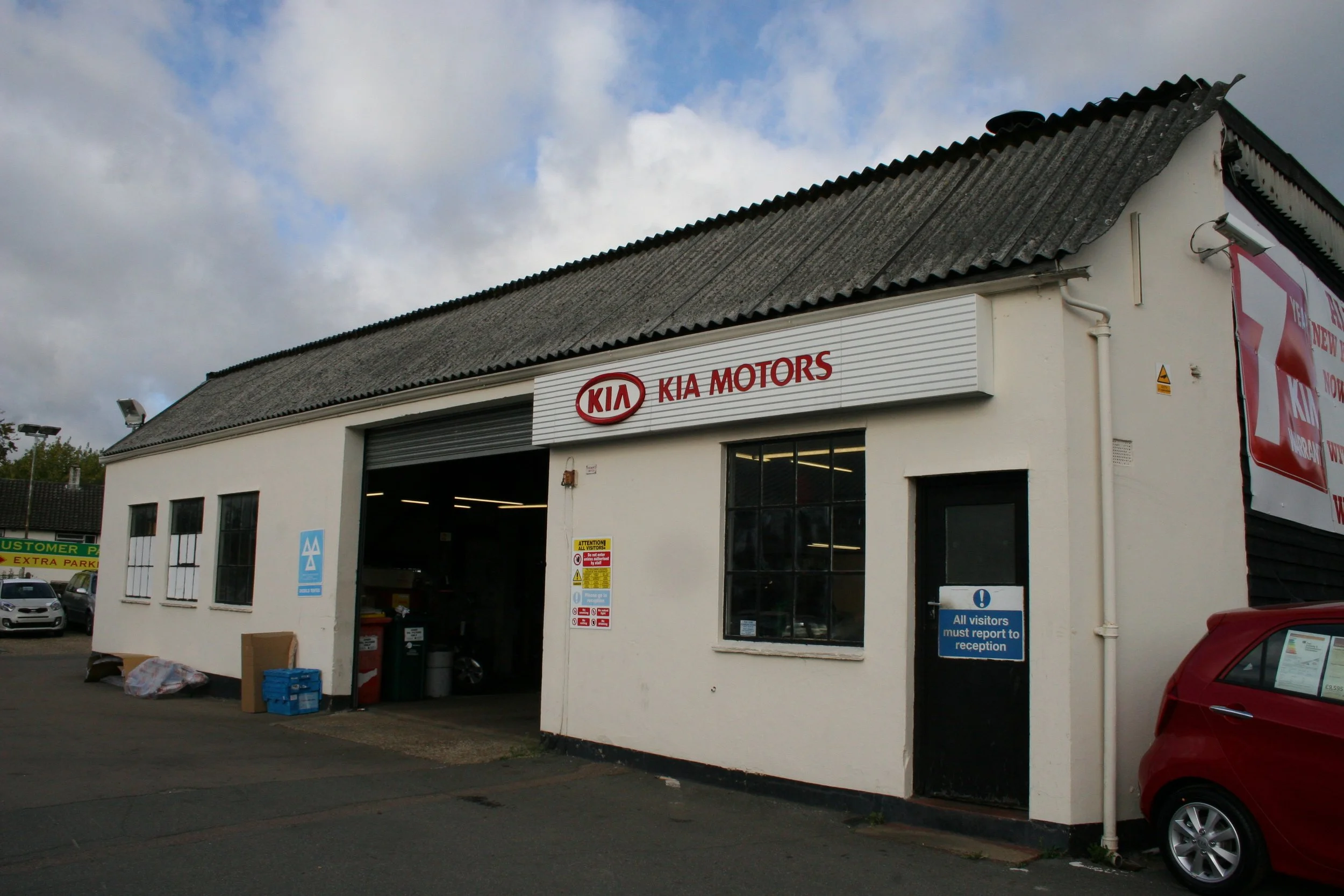
Ken Browns, Potter Street
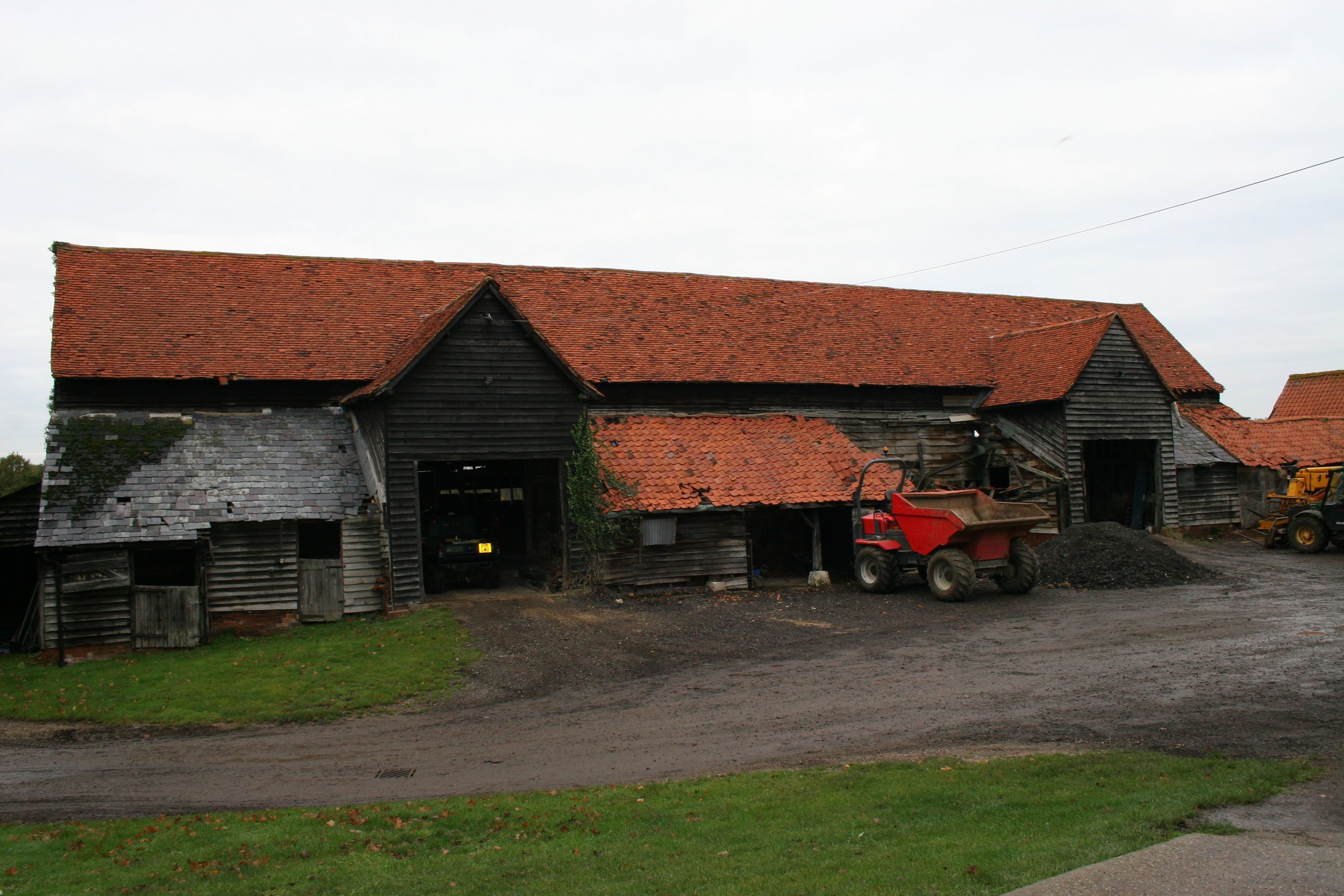
Fristling Hall Barn, Stock
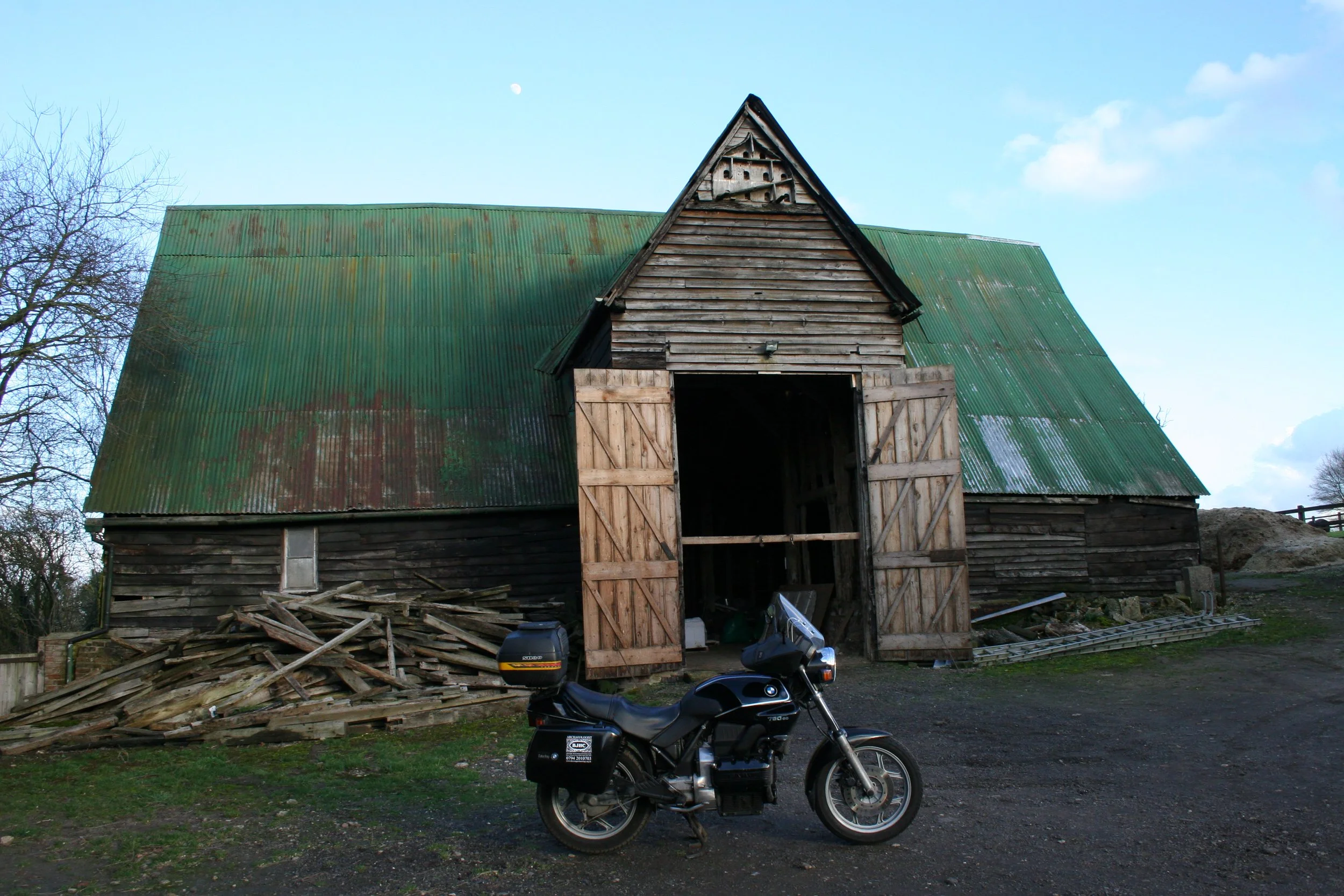
Stours Farm, Stoke by Ashen
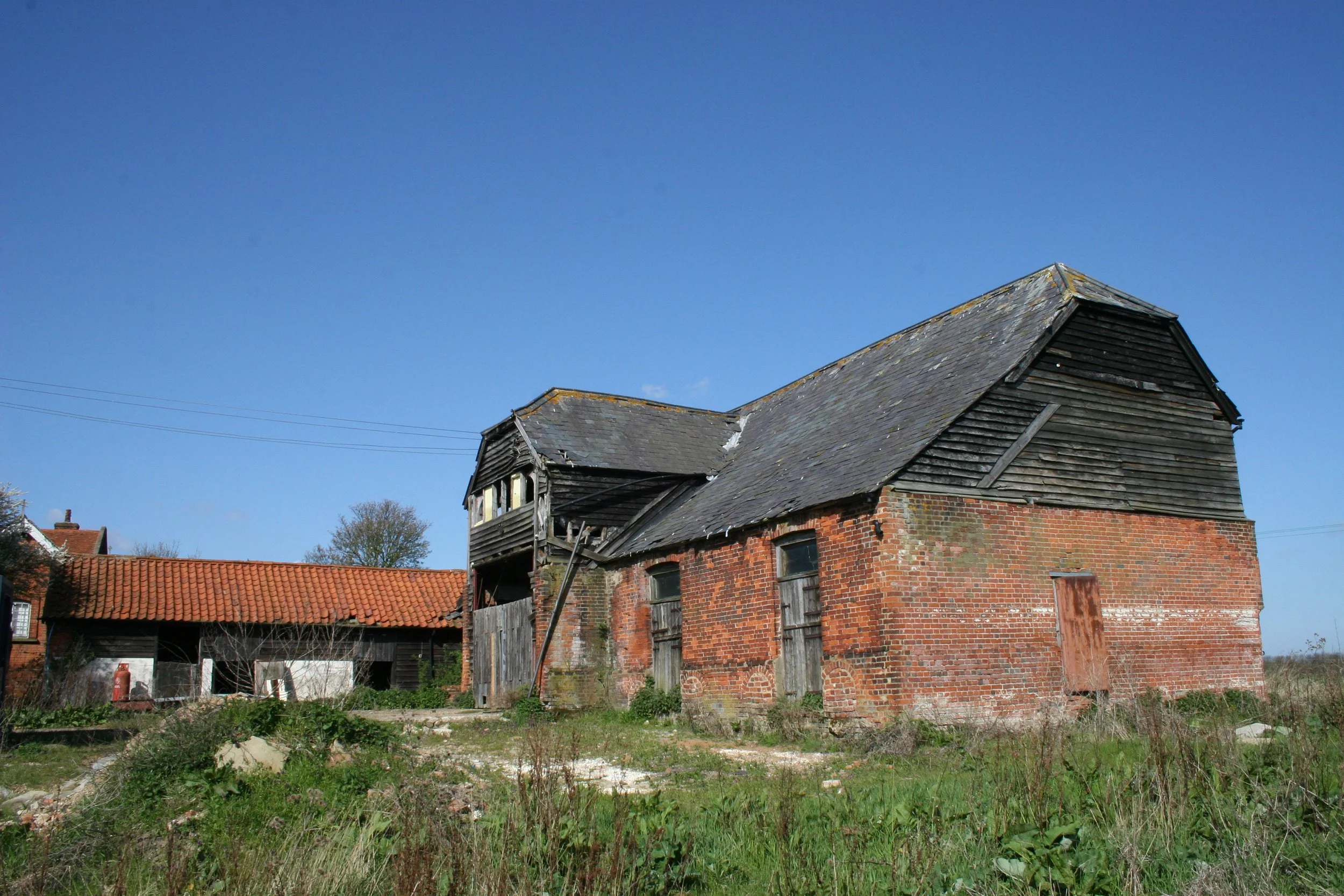
Norton Hall Barn, Cold Norton
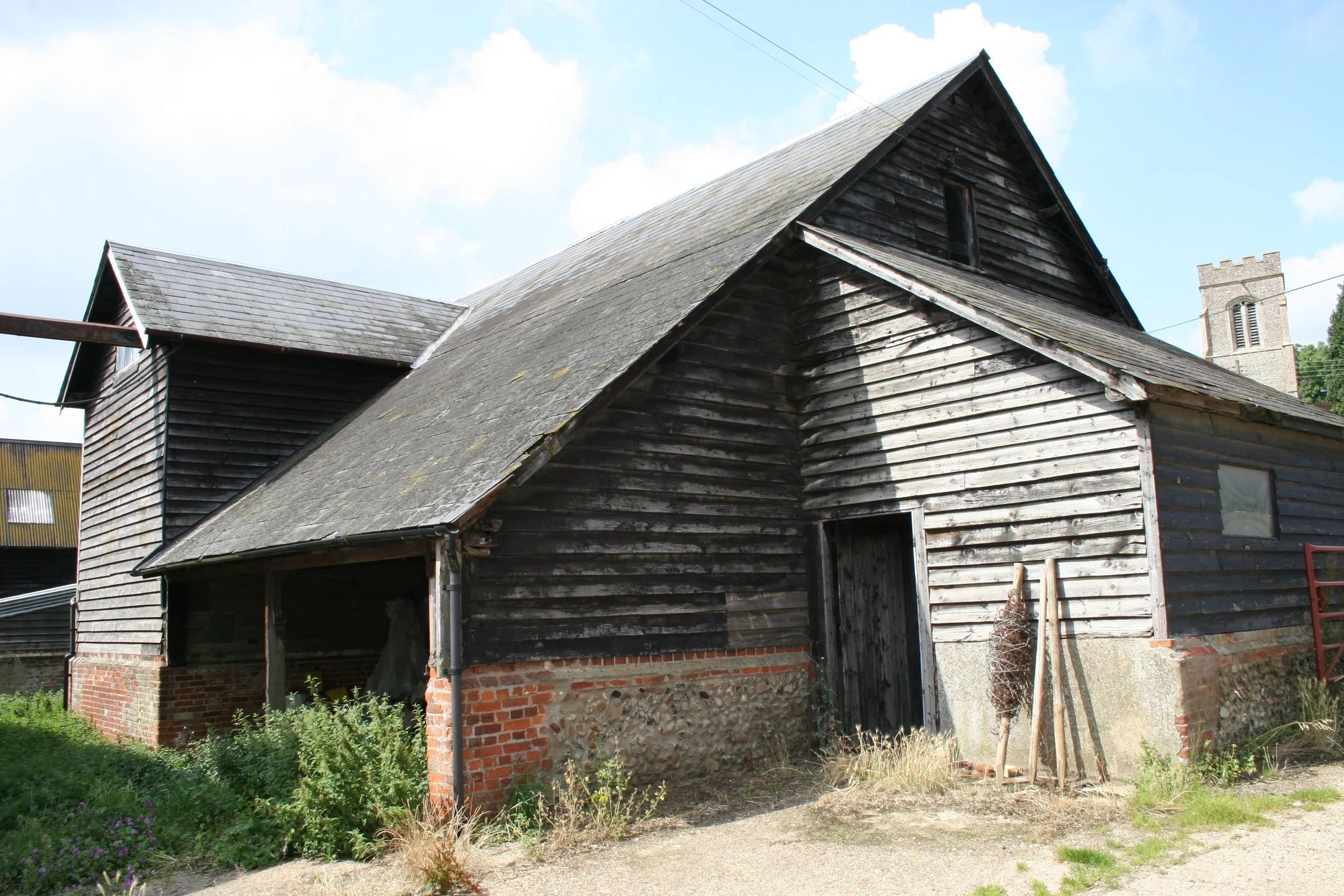
Hawkedon Barns, Hawkedon
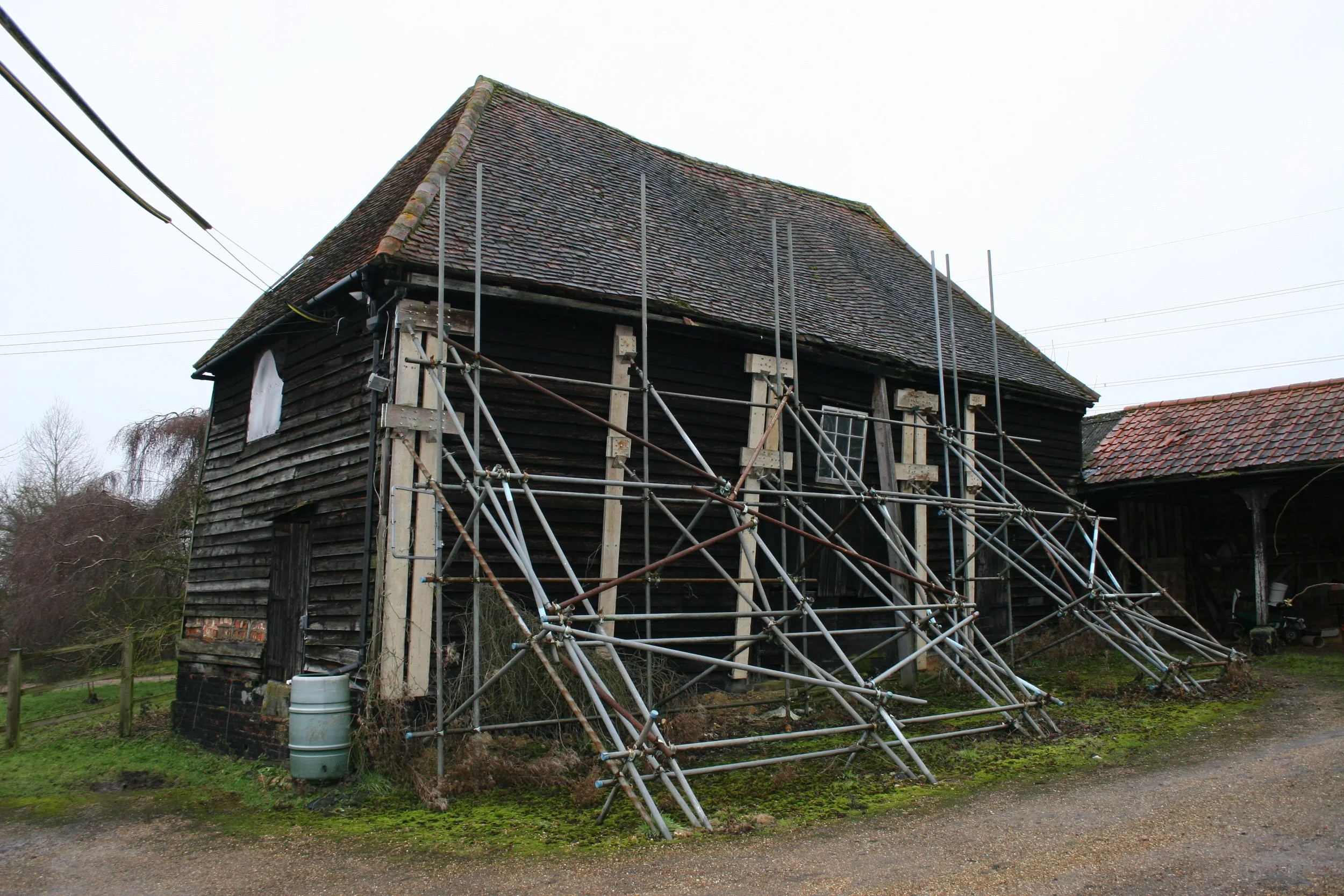
Yardley Hall Barn, Thaxted
Recording Mediaeval Barns up to AD1485
The mediaeval period is loosely defined as being between the 5th century AD, when the Romans abandoned Britain, to the end of the 15th century AD when Italian scholars began to refer to the past as mediaeval. In England, a good cut off date is 1485. This is when the House of Tudor under Henry VII came to the throne.
The opportunity to record mediaeval buildings is quite rare in comparison to later buildings, not least because there are fewer of them, but also because they are less likely to be materially changed. In my experience, most mediaeval buildings required to be examined are either churches or large historic buildings. That is not to say there are no small or vernacular buildings, and I have recorded dozens of hall houses over the years. The first mediaeval building I recorded was in 1986 under the tutelage of John McCann where we surveyed and I drew up the frame of a C14th small aisled hall in Queen Street, Coggeshall.
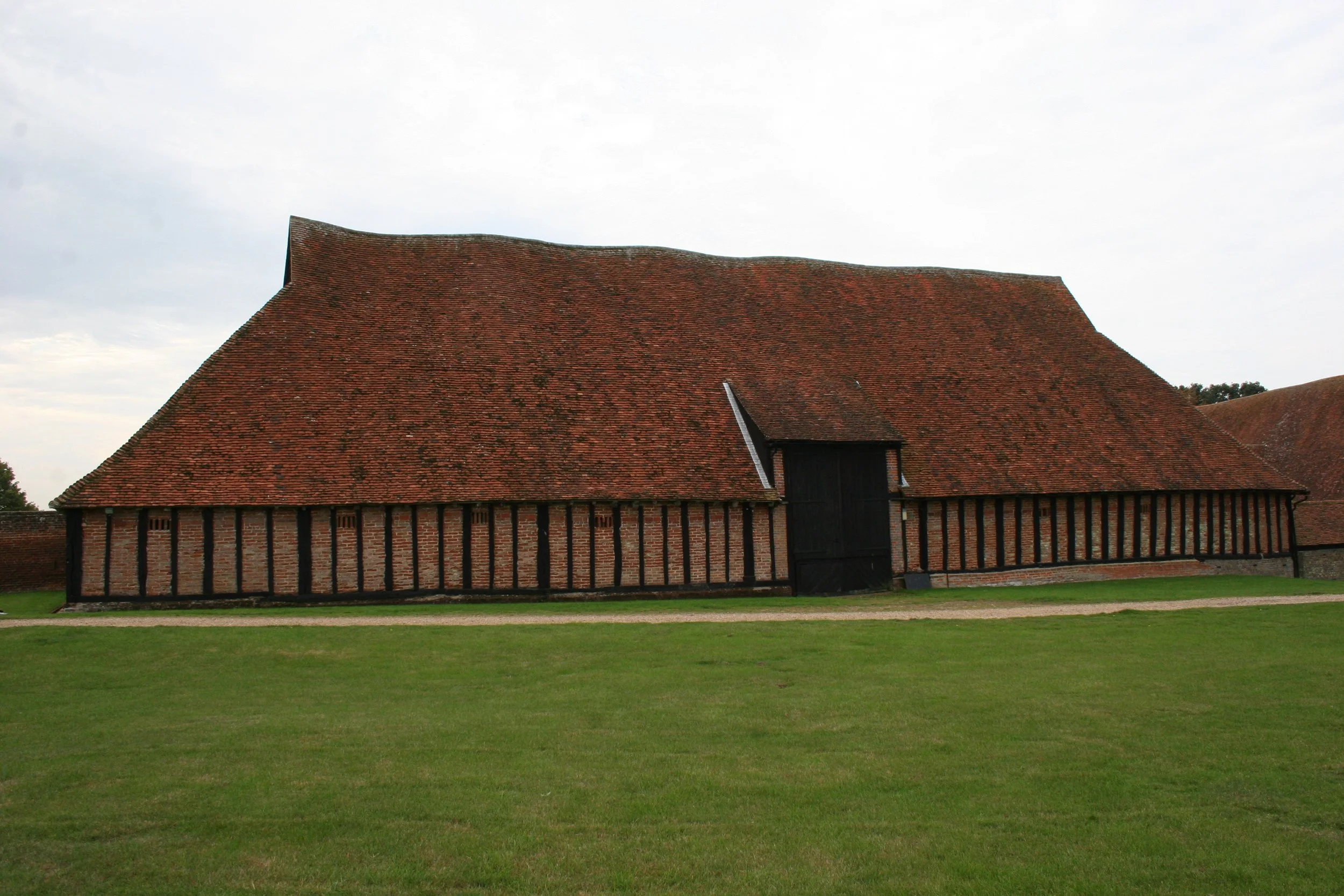
Wheat Barn, Cressing Temple
Most barns are dated in the Listings stylistically from their frames. However, in many cases the buildings have been dismantled, moved and rebuilt using the older frames but to suit the farming practices of C.1800. A classic example of this is the barn at Holyfield Farm, Crooked Mile, Waltham Abbey. Here the original C16th barn was taken down, moved and re-erected and connected to another frame. I was able to prove this in excavations where we uncovered the original footings, still containing stonework robbed out from Waltham Abbey itself.
The dismantled and rebuilt frames contain important clues. The easiest to spot is that the carpenter’s marks are out of sequence or of many different types. It was not until the 1700’s that the carpenters marked the outside of the frames knowing the marks would be hidden by weather-boarding. The studwork will be irregular or out of sequence – sometimes the darts and mortices or drillings for the original wattle and daub do not line up.
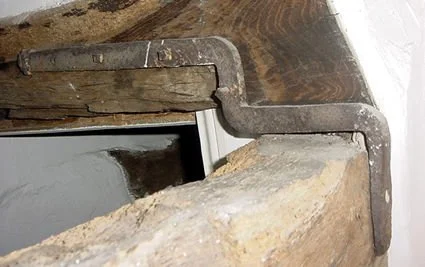
C18th Serpentine Tie
However it is very important to take each element and combine it in context. It is not enough to identify a ‘stop-splayed and tabled scarf with sallied and undersquinted butts, internal tongues and key’ and assign a date of the C13th to it because it appears in the Cressing Wheat Barn. Recently, when recording the roof timbers of Brunel’s Sawmill in Chatham, I recorded exactly the same joint knowing that it must date to after 1854 when the original roof of the 1814 building was damaged by fire. The same scenario played out in the roof of Canterbury Cathedral where most of the original timbers had been replaced in softwood after a fire.
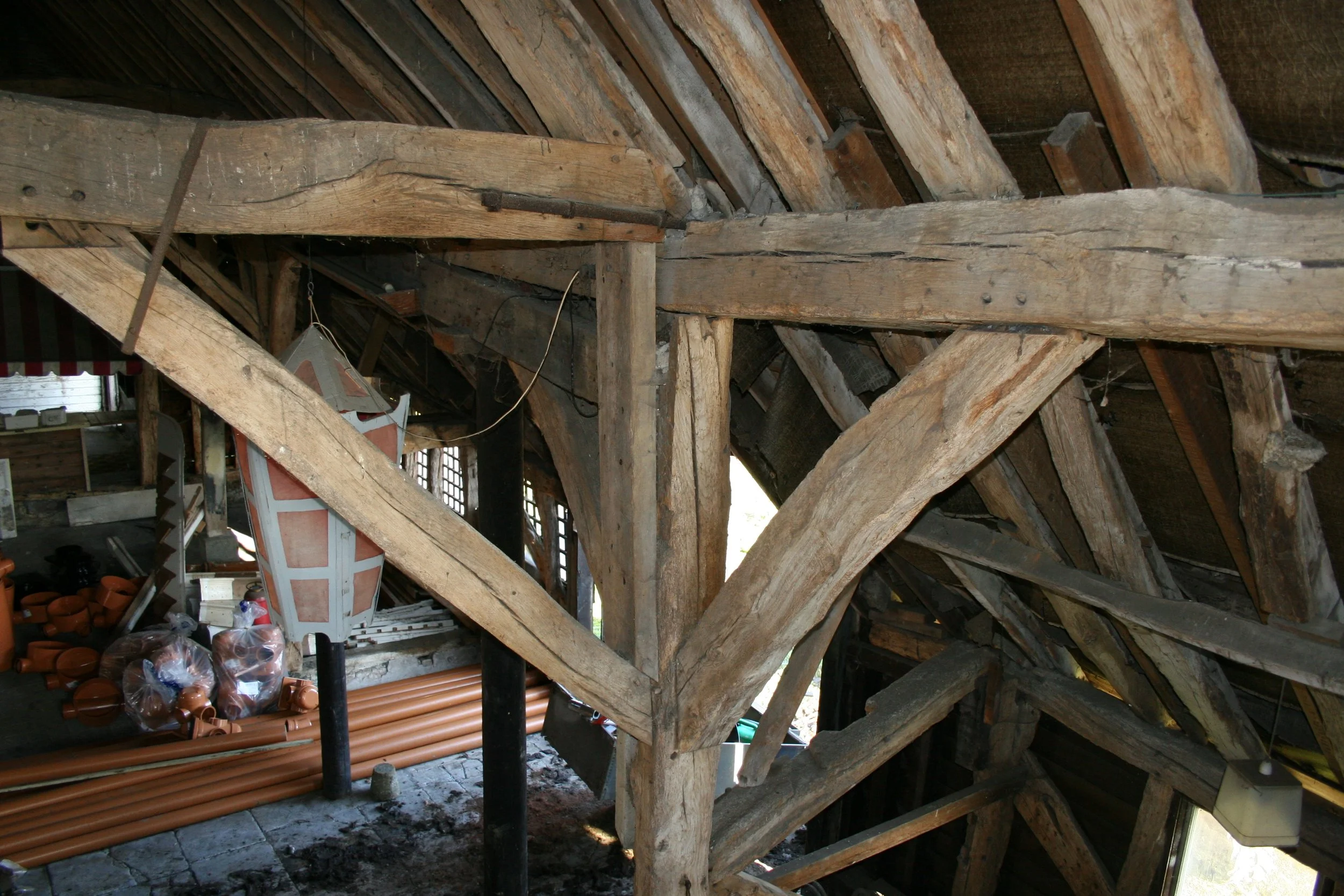
Chithams, Ramsden Heath - Arcade Post
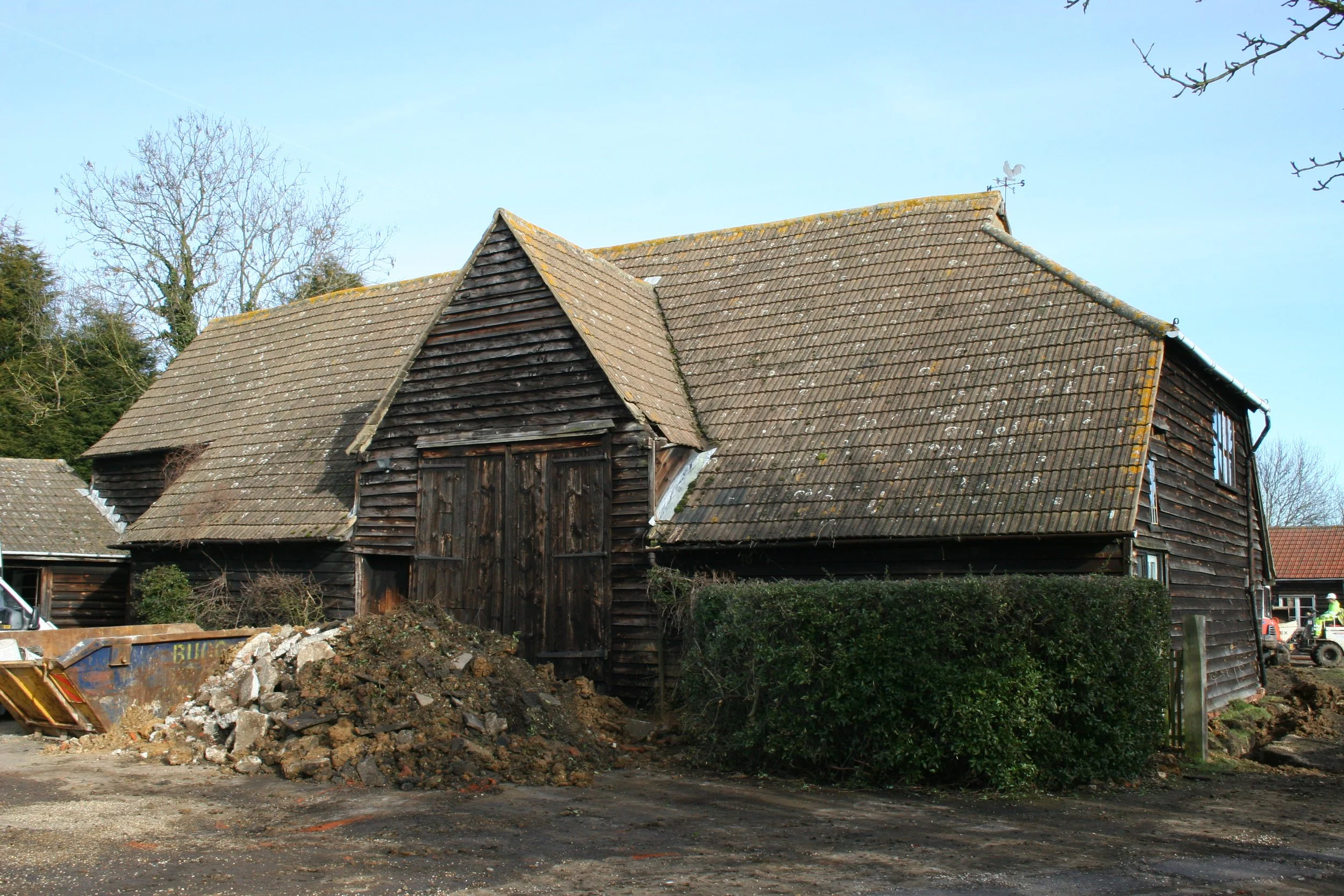
Chithams, Ramsden Heath
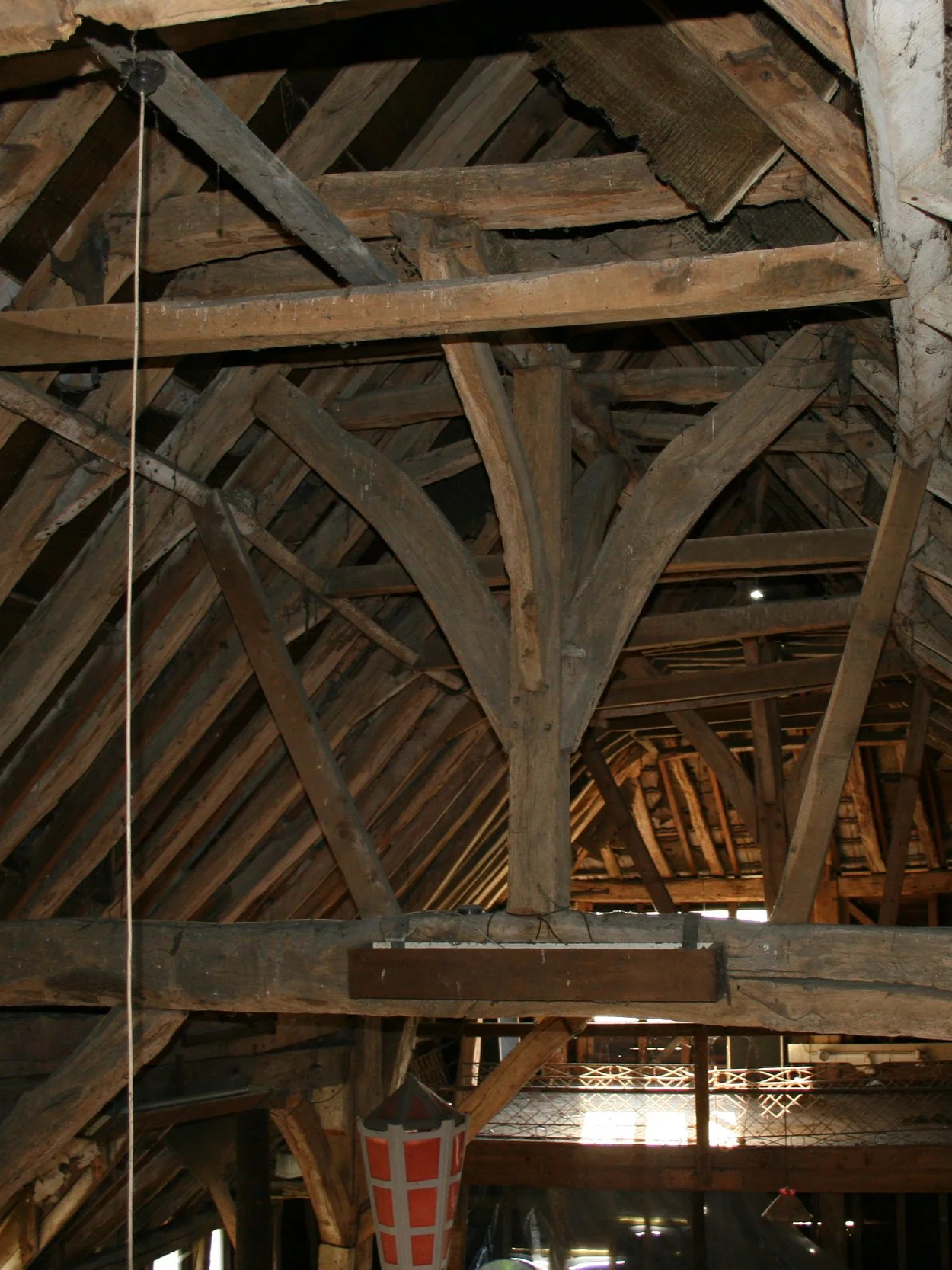
Chithams, Ramsden Heath - Crown Post Roof
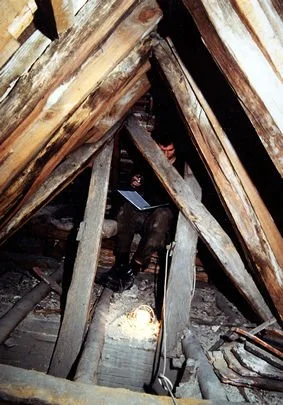
C14th small aisled hall, Queen street Coggeshall
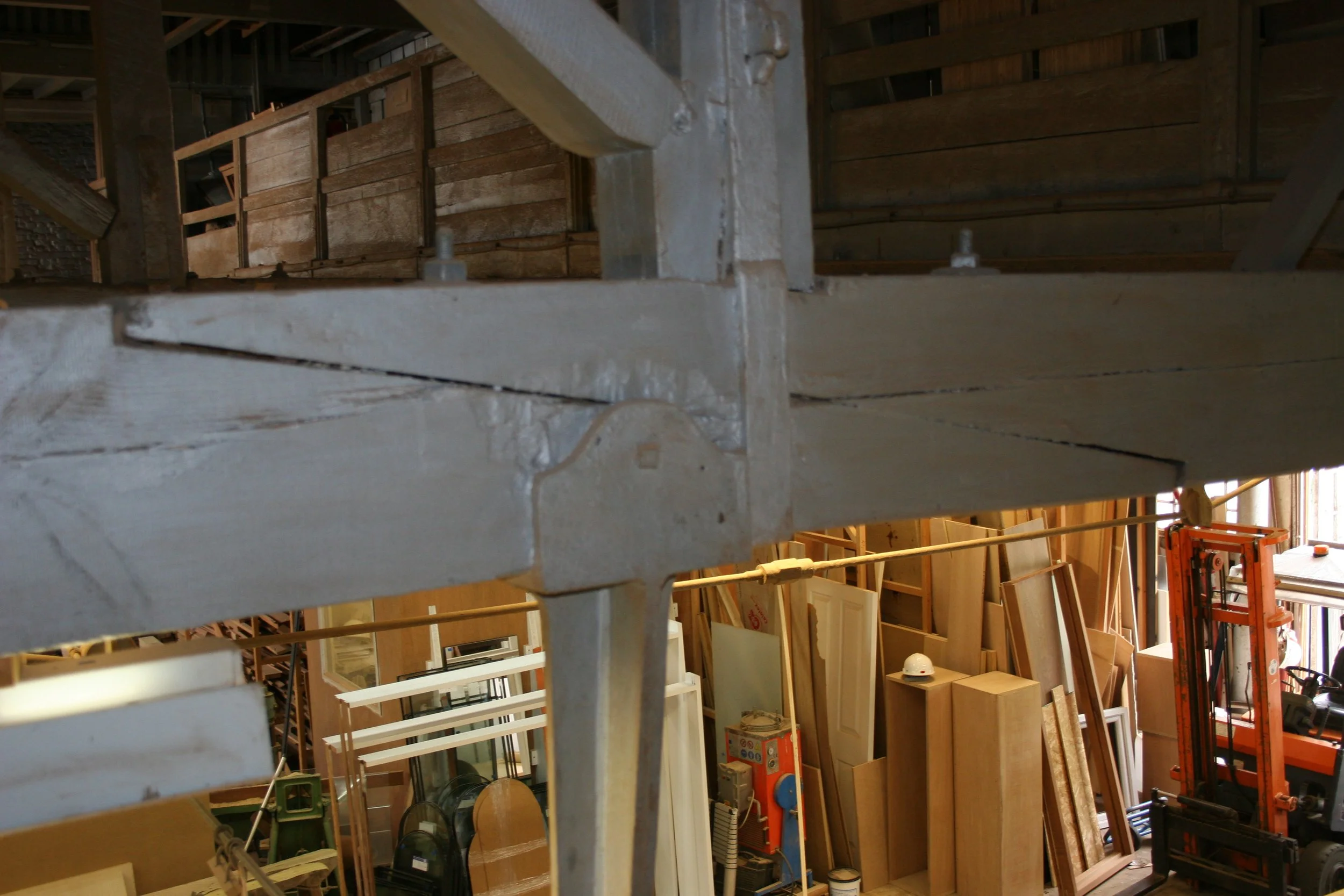
The most impressive mediaeval barns I have recorded are the Wheat Barn (c.1256) and Barley Barn (C.1206) at Cressing Temple in which I spent three months making meticulous record drawings of both buildings. I produced explanative exhibition boards and for many years gave tours and talks on the Templar built structures. I also excavated within the Wheat Barn and wrote up the excavation record of the entire area encompassing the buildings.
Laying chronologically between these is the Grange Barn (C.1227), which I studied and produced a 10-panel exhibition. However, because of the extensive 1980’s restoration from a ruin, very little of the Grange Barn is mediaeval. The only other barn I have recorded that can be said to be truly mediaeval is the barn at Chithams, Ramsden Heath which retains its inserted crown post roof as well as its original framing.
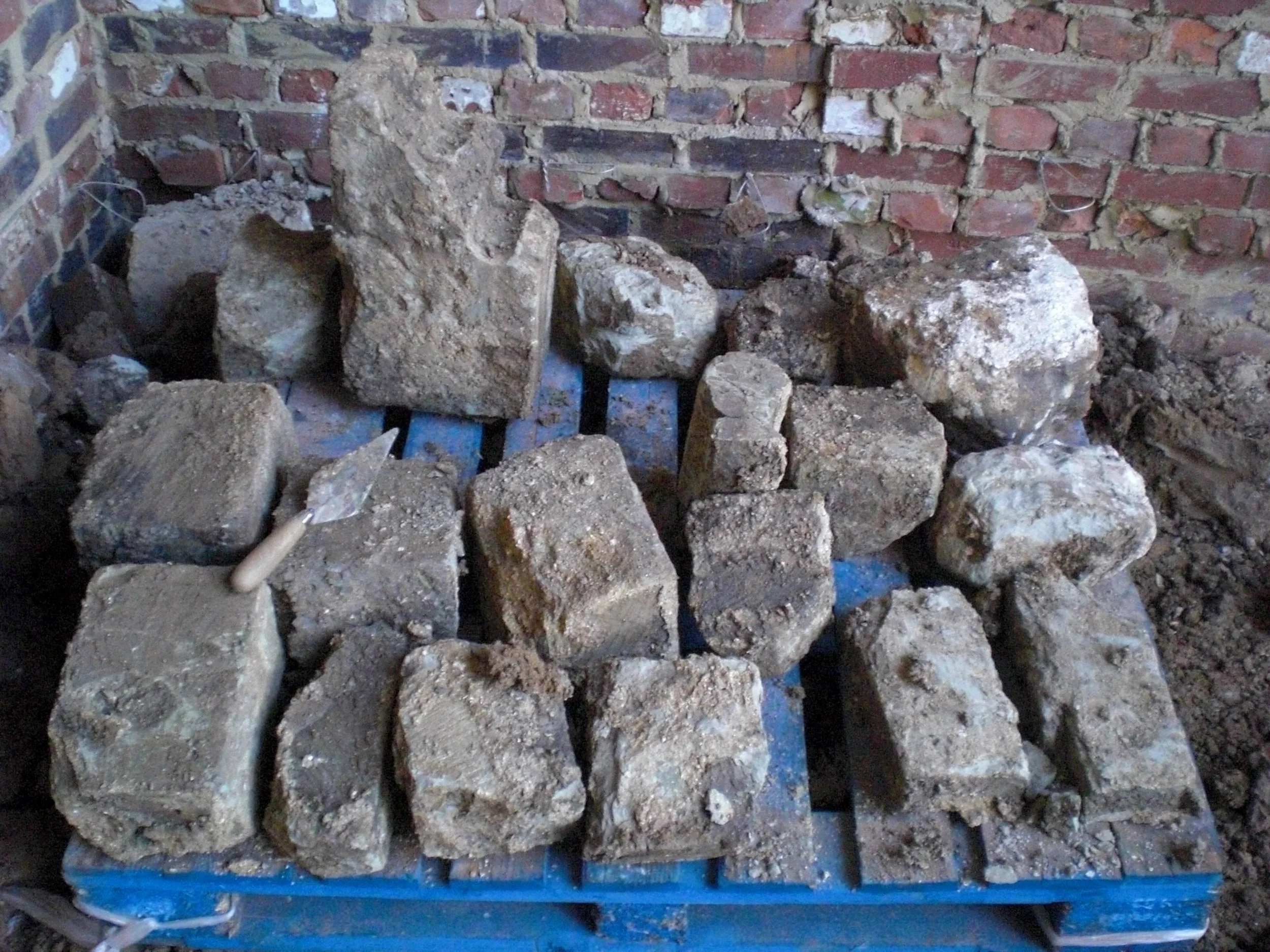
Holyfield Farm Barn, recovered stonework from Waltham Abbey.
The Georgian carpenters used unregulated joints or structures often fixed with metal joints. When the original mediaeval buildings were erected they were designed to a hierarchy controlled by guild practices. These practices changed over time meaning joint types changed, forms changed and geometry changed. This chronology of change was recognised by Cecil Hewett and a dating technique was established. His methods have been refined and there are several good references to help date carpentry by its form.
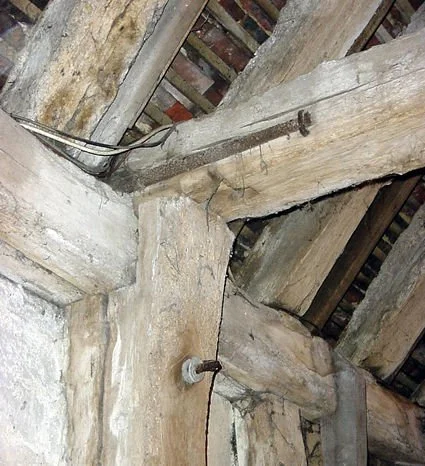
Barley Barn, Cressing Temple
Brunels Sawmill, Chatham - Scarf Joint
Characteristically, an early mediaeval barn (C13th onwards) will have storey or arcade posts that taper from bottom to top (i.e. the same way the tree grew) and have slender upstands in place of jowls. These often split off or twist out. The timbers will be of square section and straight. The mortices and tenons will have few pegs, two or three in the large timbers and only one in the studs. In very early barns like those at Cressing Temple, the walls were vertically boarded and the studs were very widely spaced. The trusses may be complex with passing braces, scissor braces and double tie-beams connected with cross-braces. The lap joints may have notches or secret notches. The scarf joints will usually be splayed, complex and ornate.
Coming forward in time to the second half of the C14th, we see the introduction of curved braces, shores and jowled posts. The tie-beams acquire cambers and the spandrels and braces have more pegs. The western end of the Cressing Wheat Barn was rebuilt at this time and the differences are easy to mark. Also at this time there is an introduction of crown post roofs into barns, and the example that I recorded is at Chithams, Ramsden Heath.